HP Wolf Cloud Endpoint Manager
A cloud console for IT admins to manage entire fleets of HP Thin Clients from a browser — device enrollment, policy enforcement, compliance monitoring, and automated remediation, from ten devices to ten thousand without a redesign.
OutcomeA single Device Configuration pattern — one toggle-and-table primitive — absorbs 15+ configuration categories, so a new category ships as content, not a new screen.
The Challenge
An IT administrator responsible for endpoint fleets is not managing a handful of laptops. They are managing a retail chain's thousand checkout kiosks, a hospital's clinical workstations, a call center's thin-client floor — heterogeneous hardware, running different OS versions, spread across sites, each org caring about wildly different signals. What a hospital's compliance officer needs to see first is not what a retailer's store-ops lead needs to see first, and a console that hard-codes one opinion is wrong for almost everyone.
HP Wolf Cloud Endpoint Manager is HP's answer to that: a cloud-enterprise platform for policy-driven management, active monitoring, and 24/7 automated remediation of HP Thin Client fleets. The design problem was never "make the dashboard look good." It was strategic — define the information architecture, reusable product patterns, and safety rules that stay correct whether the admin oversees ten devices or ten thousand, and whether they are a day-one operator or a power user. I worked at the staff-IC level across the surfaces that carried that load.
- UX Strategy
- Information Architecture
- Componentization
- Edge-Case Modeling
- Cross-Org Trade-offs
Overview
A unified, web-based management experience spanning device discovery and enrollment, policy authoring and versioning, reusable configuration templates, user and role administration, and fleet-wide compliance monitoring. The surfaces below were selected to show staff-level product design — UX strategy, componentization, edge-case modeling, and cross-org trade-offs — rather than a tour of every screen in the console.
Screens
Six moments from the shipped console — the Home command center, device groups, policy conflict resolution, scope assignment, the reusable configuration pattern, and the template relationship. Each is a real product export. The full case study, with the design rationale for every decision, is one click away.
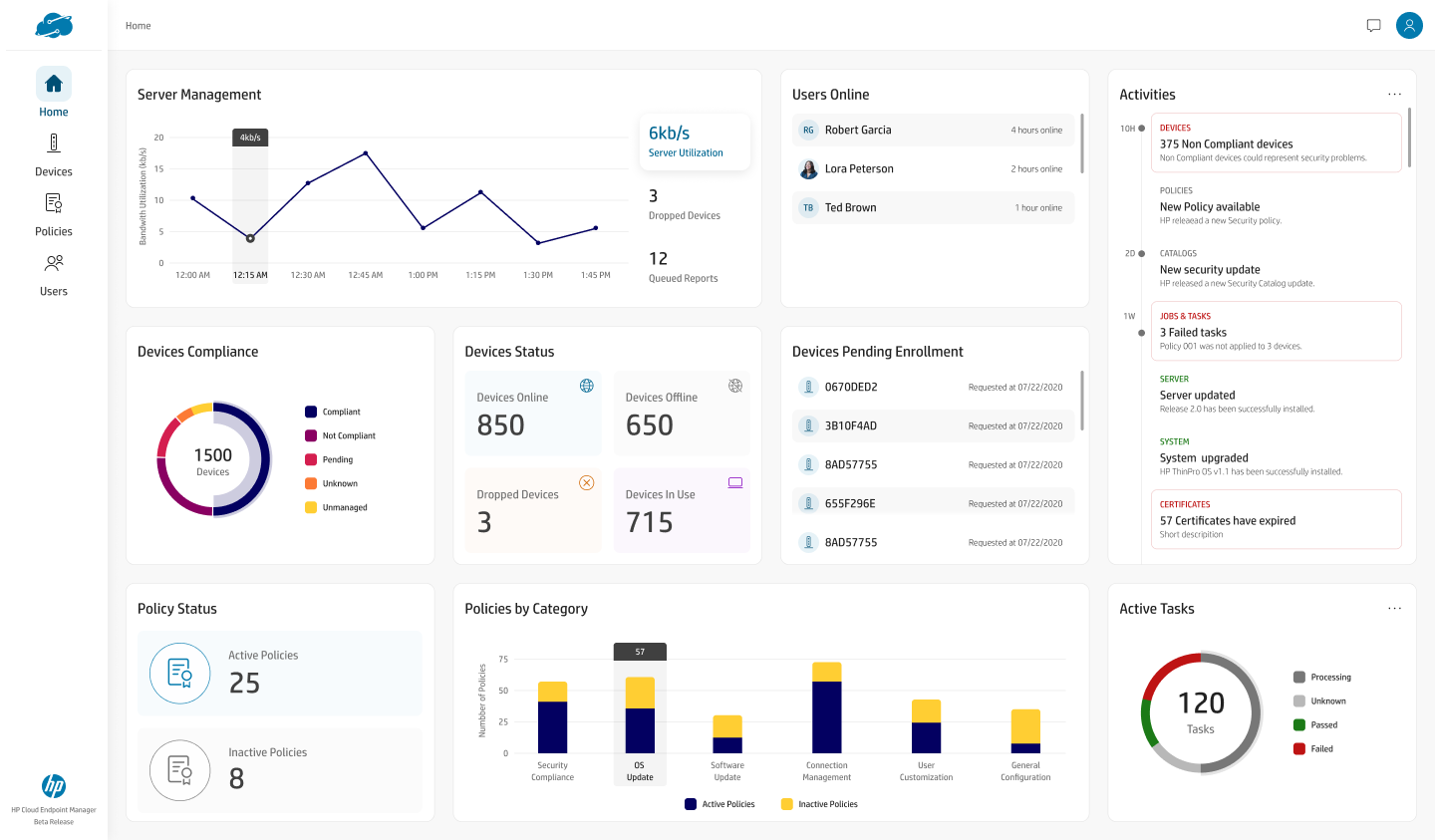
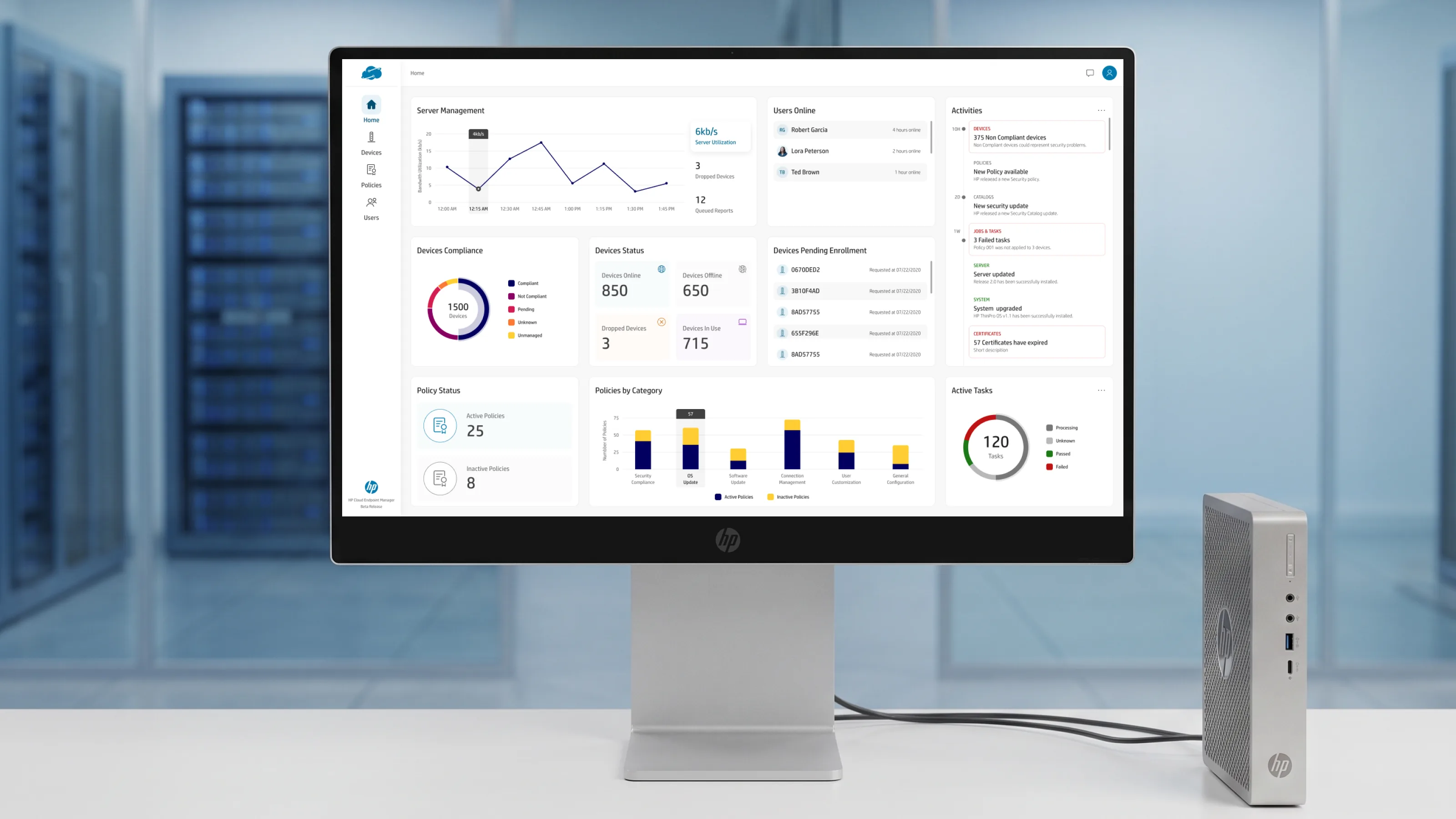
Compliance and security cards rank above vanity metrics like uptime and counts. Every card is user-customizable — reorder, hide, resize — so one default layout holds from a ten-device pilot to a ten-thousand-device fleet without redesign.
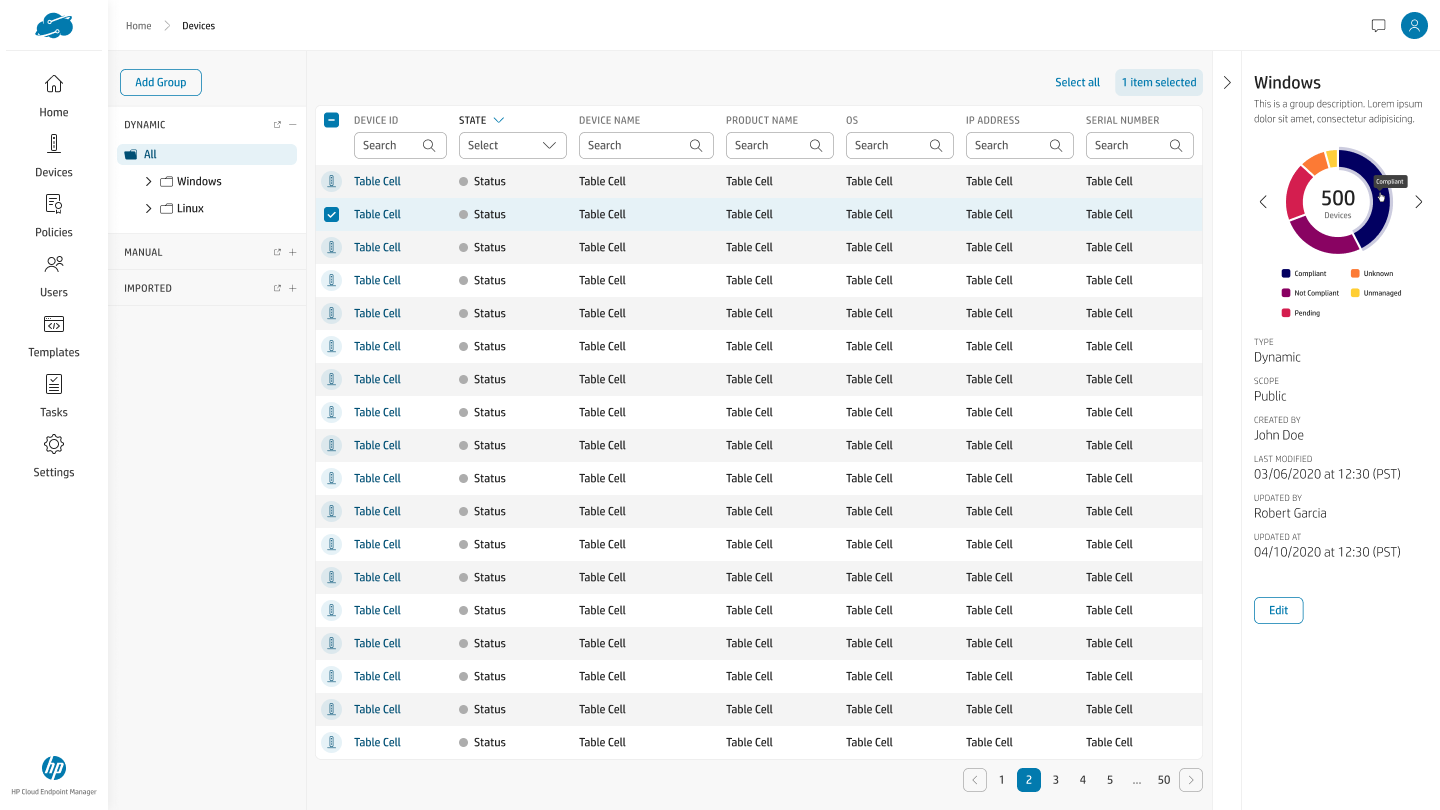
A public/private group hierarchy with drag-and-drop to move or copy. Moving a folder can change access for hundreds of devices, so any cross-scope move raises an explicit confirmation — the speed of drag-and-drop with none of its silent risk.
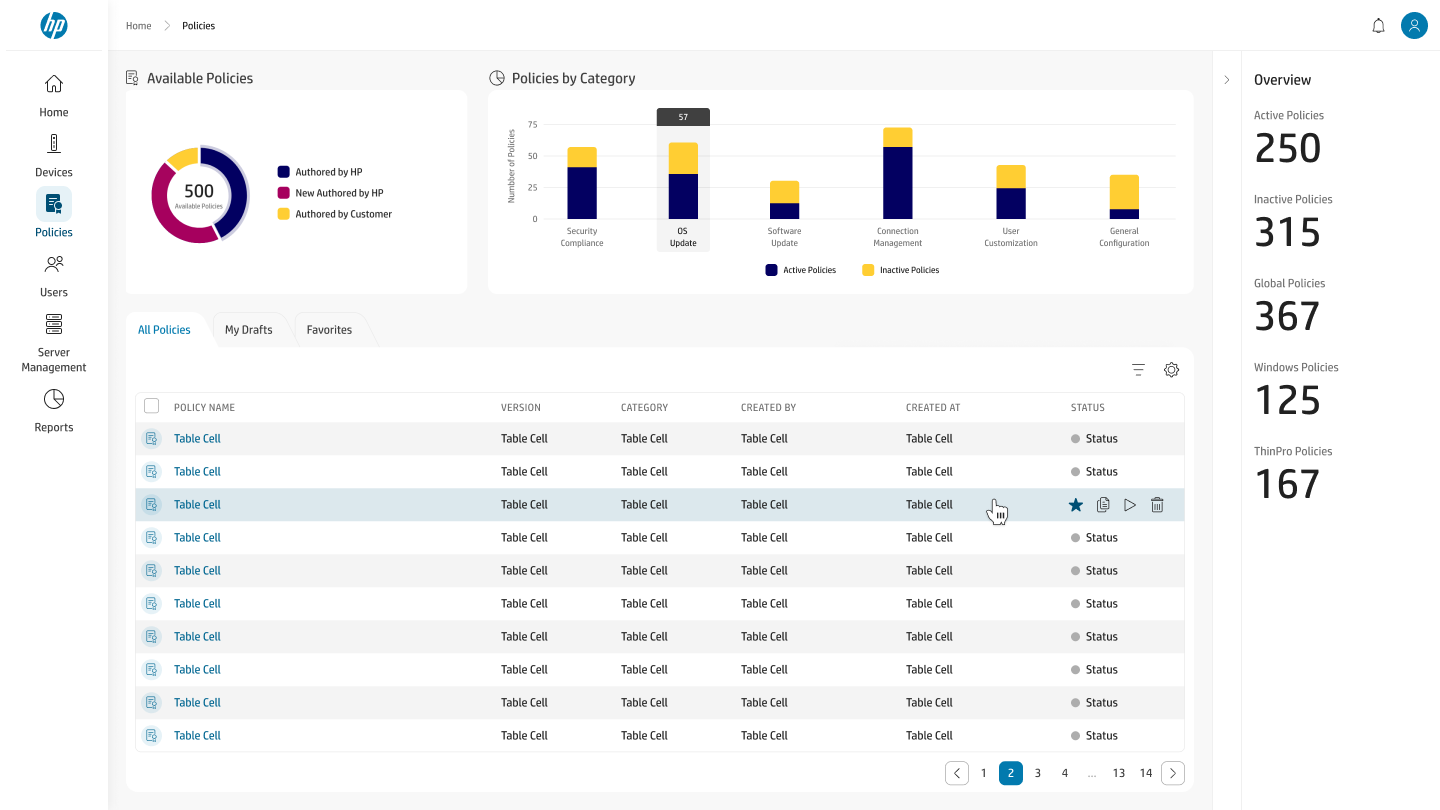
The compliance engine: authoring, drafts, versions, and life-cycle. Conflict resolution is built for the main case, not the edge case — bulk-resolve in one action whether two policies disagree or two hundred, then drop into per-category detail only where it matters.
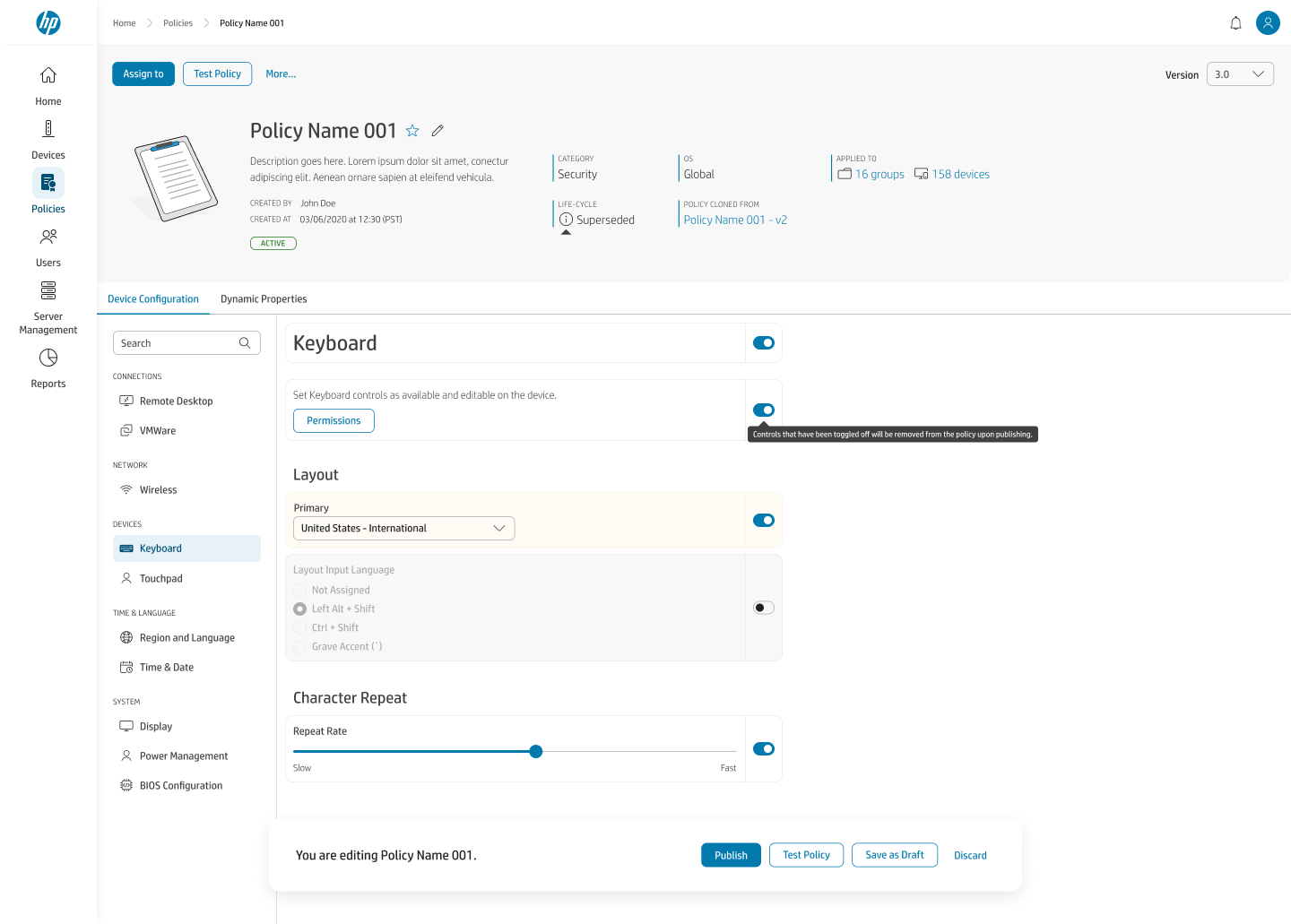
A policy header answers "what does this do to my fleet?" in plain terms — applied groups and devices, one click to drill in. Below it, the reusable toggle-and-table pattern: one primitive that renders a single Wireless switch and a multi-field BIOS form alike.
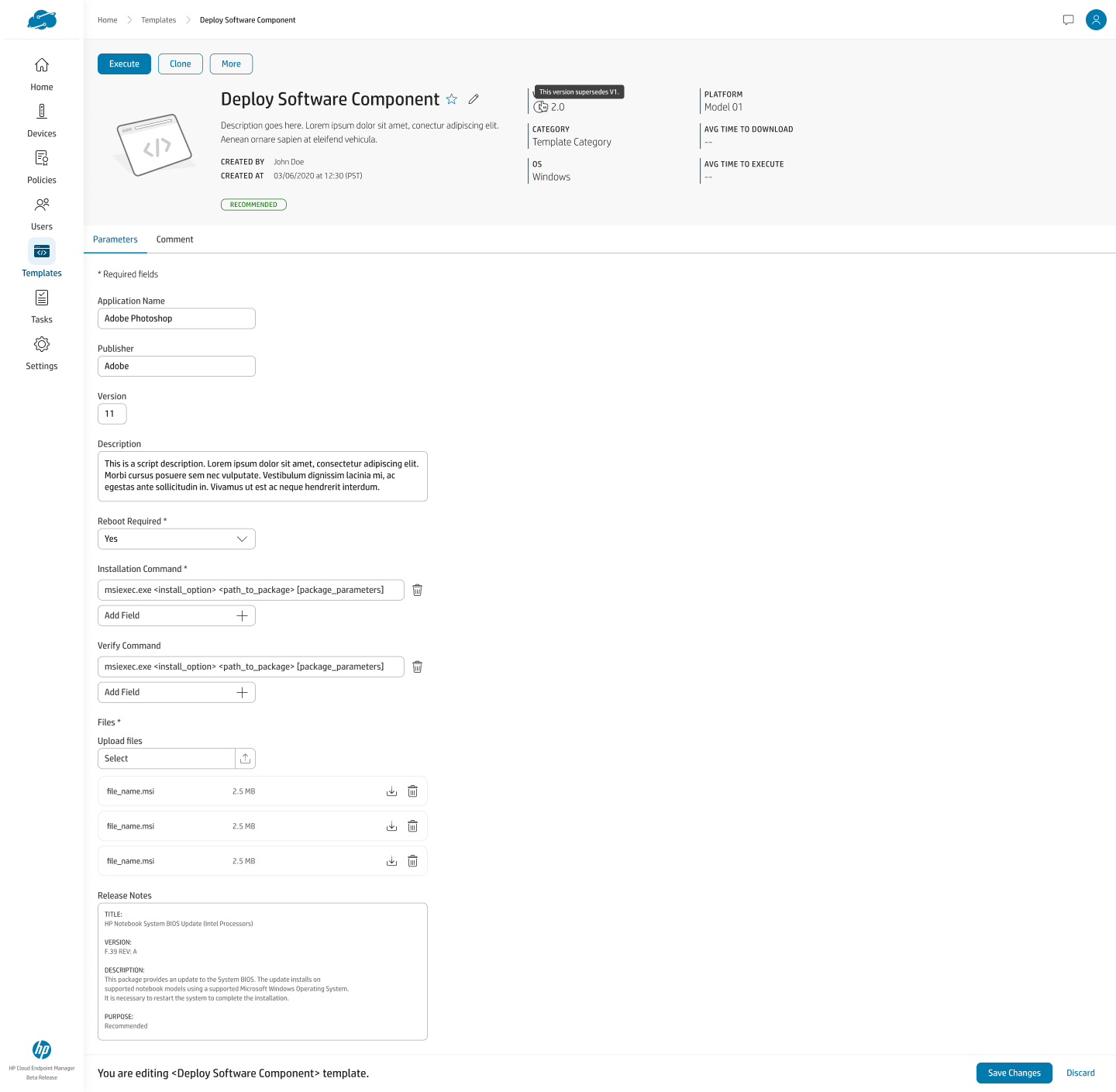
Templates are standalone objects — script, registry, BIOS, software — referenced by, not copied into, any policy that uses them. Editing one surfaces every policy it feeds into, so the ripple effect of a reusable object is visible before it's committed.
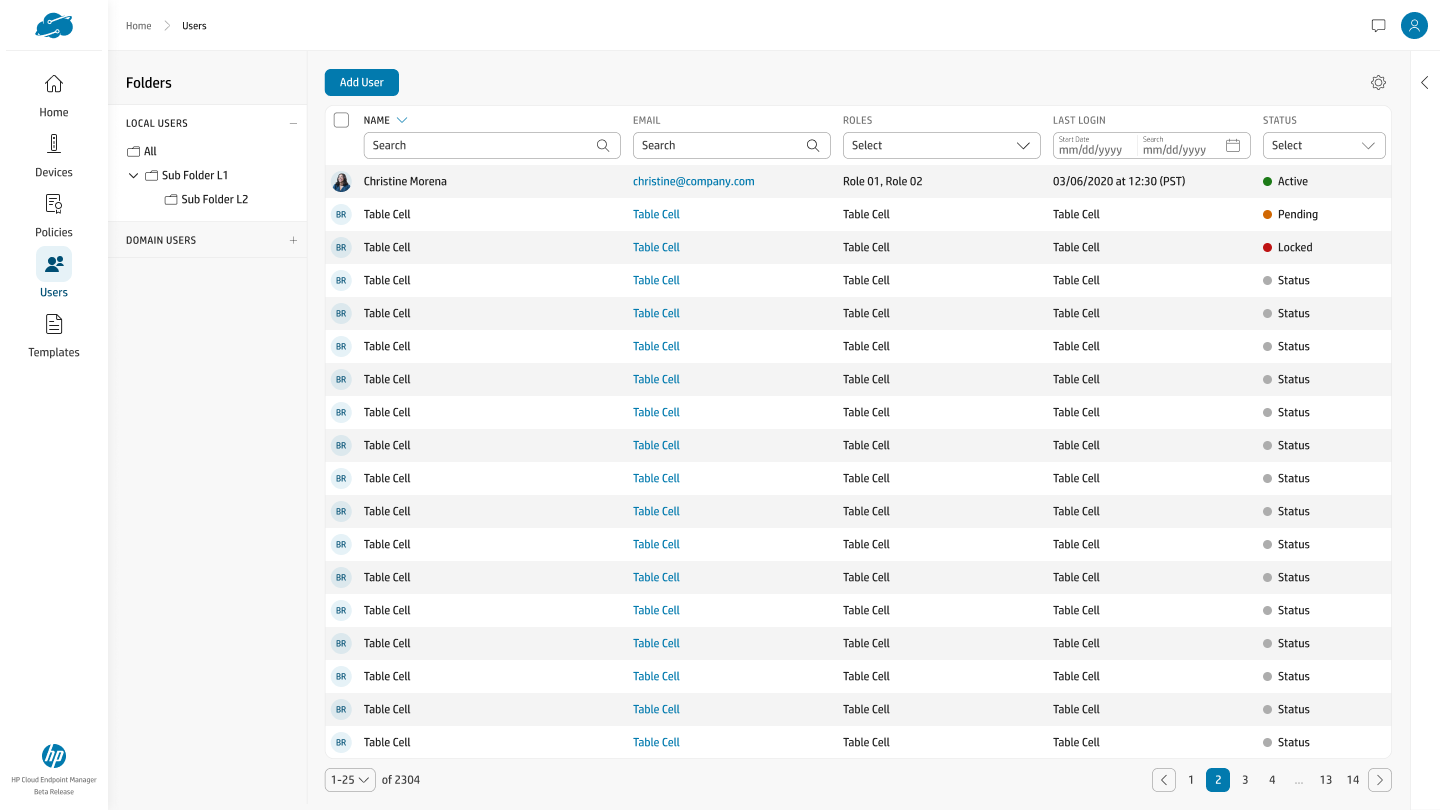
Local and domain users organized into folders, with roles and an explicit account-status lifecycle — active, pending, locked — shown as first-class states rather than one opaque flag an admin has to interpret.
Outcome
- Delivered the design for a shipped, live cloud console (hpcem.com) — device enrollment, policy enforcement, compliance monitoring, and automated remediation for HP Thin Client fleets.
- Designed the Home dashboard as a set of reorderable, opinionated cards, so one default layout serves retail, healthcare, and call-center orgs without a per-vertical redesign.
- Specified a single Device Configuration pattern that absorbs 15+ configuration categories, cutting new-category design and QA cost from a bespoke screen to near-zero content work.
- Made scale-safe by design: every cross-scope group move and every policy conflict resolves through a legible, explicit action — zero silent state changes across a fleet of any size.
- Separated templates from policies as referenced objects with a visible assigned-policies list, giving admins composability and blast-radius awareness in the same interaction.