HP Wolf Cloud Endpoint Manager
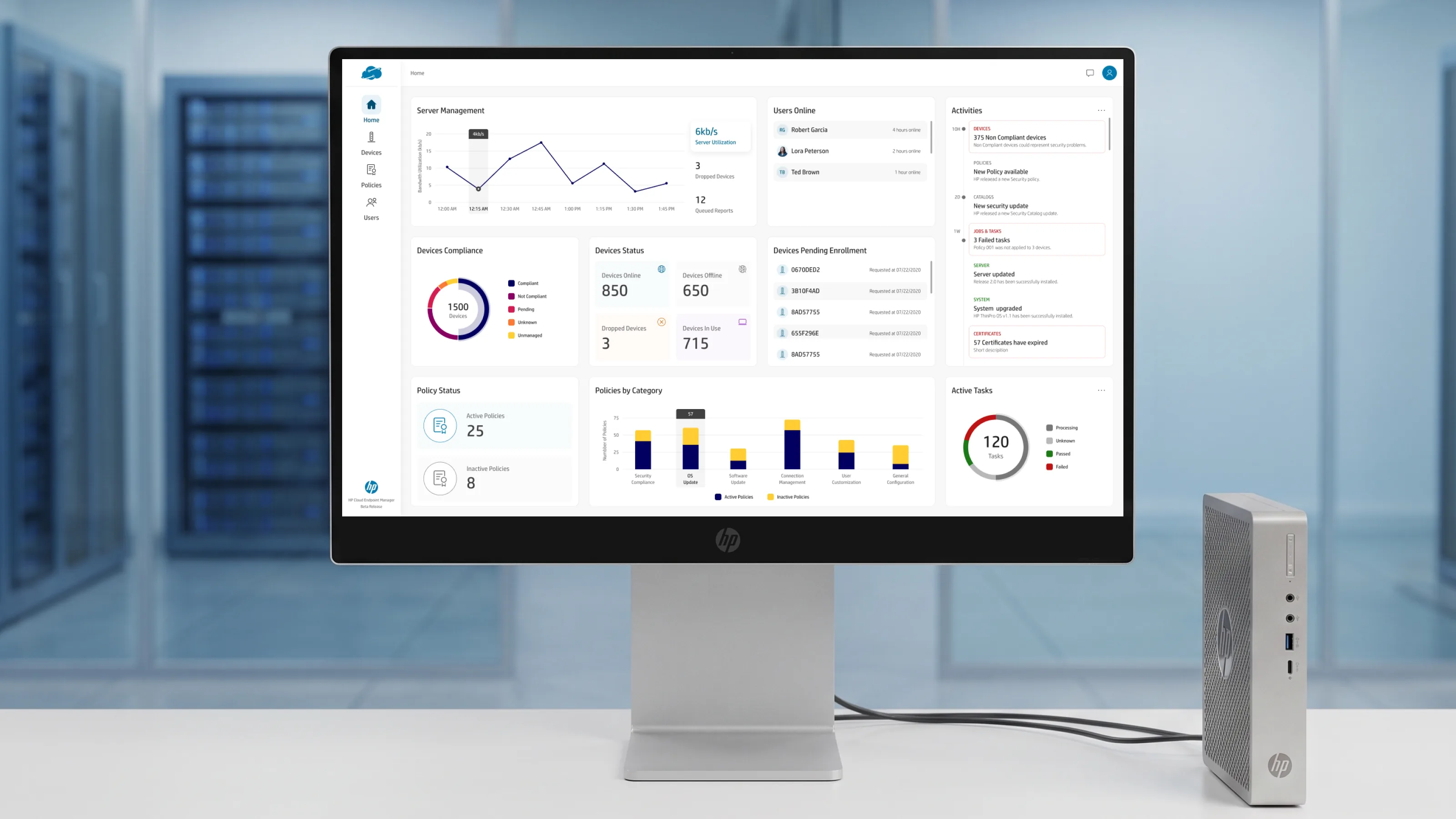
An enterprise control plane that helps IT teams enroll, govern, monitor, and remediate distributed HP Thin Client fleets, from ten devices to ten thousand.
OutcomeA scalable operating model that makes fleet health, action scope, and downstream consequences visible before administrators commit changes.
The Product Problem
Enterprise administrators may be responsible for a retailer's checkout kiosks, a hospital's clinical workstations, or a call center's thin-client floor: heterogeneous hardware, different operating-system versions, policies, permissions, and compliance conditions distributed across many locations.
At small scale, almost any administration interface can appear manageable. At enterprise scale, the same interaction can affect hundreds or thousands of endpoints. The product had to make powerful fleet-wide action fast without allowing its consequences to become invisible, while giving HP a configuration model that could keep expanding without creating a new workflow for every capability.
- Operational Clarity
- Safe Bulk Action
- Extensible Configuration
- Visible Dependencies
Product Strategy
I approached the console as an operational control plane rather than a collection of administration screens: help administrators see what requires attention, understand impact before acting, and scale capability through reusable product models. The same principles connect device discovery, policy authoring, configuration, templates, compliance, and user administration.
Key Product Decisions
Six moments from the shipped console show how the operating model works: prioritize what needs attention, make the scope of consequential action visible, and reuse product objects so capability can grow without proportional complexity.
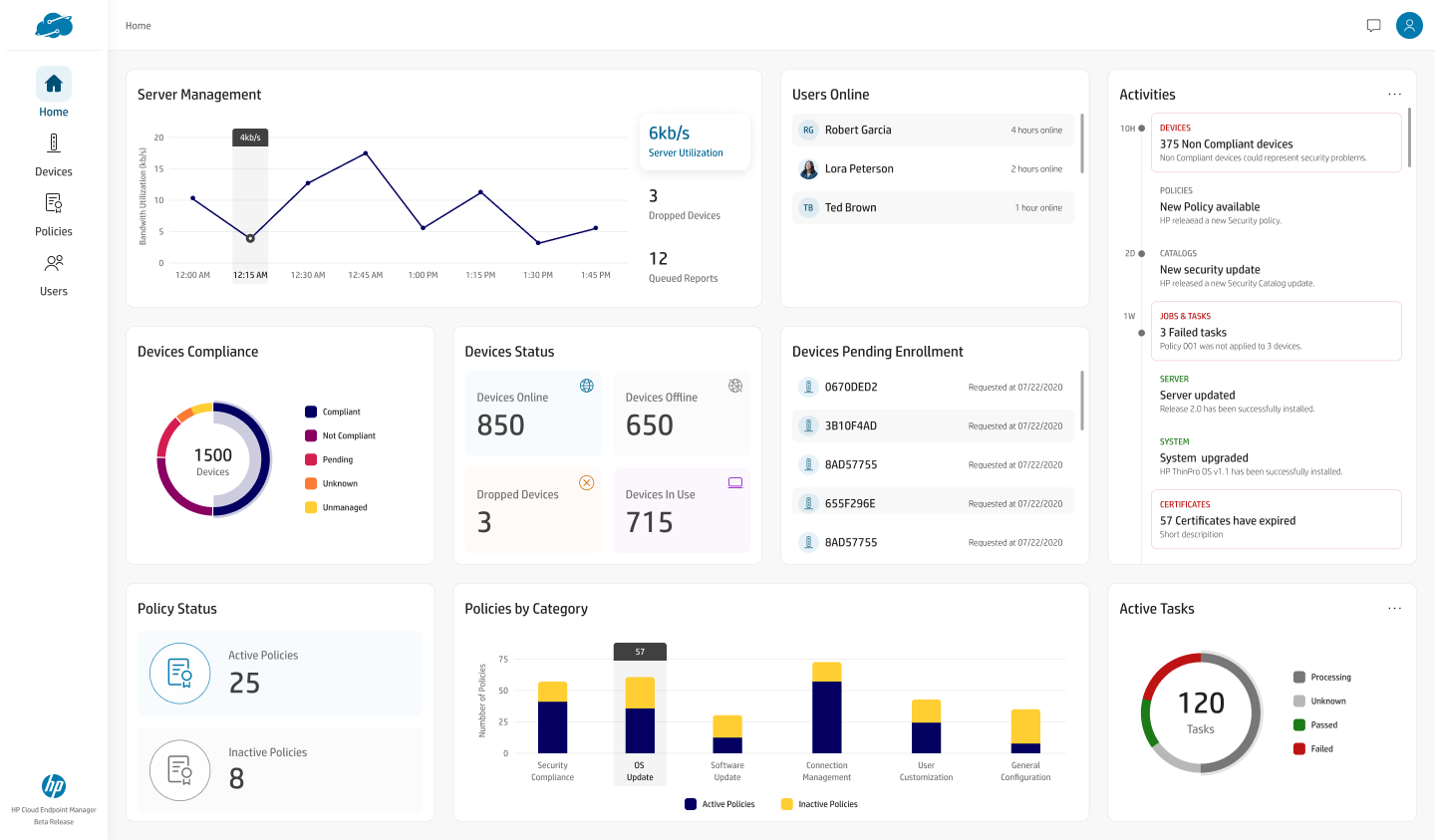
The Home command center prioritizes compliance, security, and active work over passive counts. An opinionated default stays useful on day one, while reorderable and resizable cards let different organizations surface the signals that drive their work.
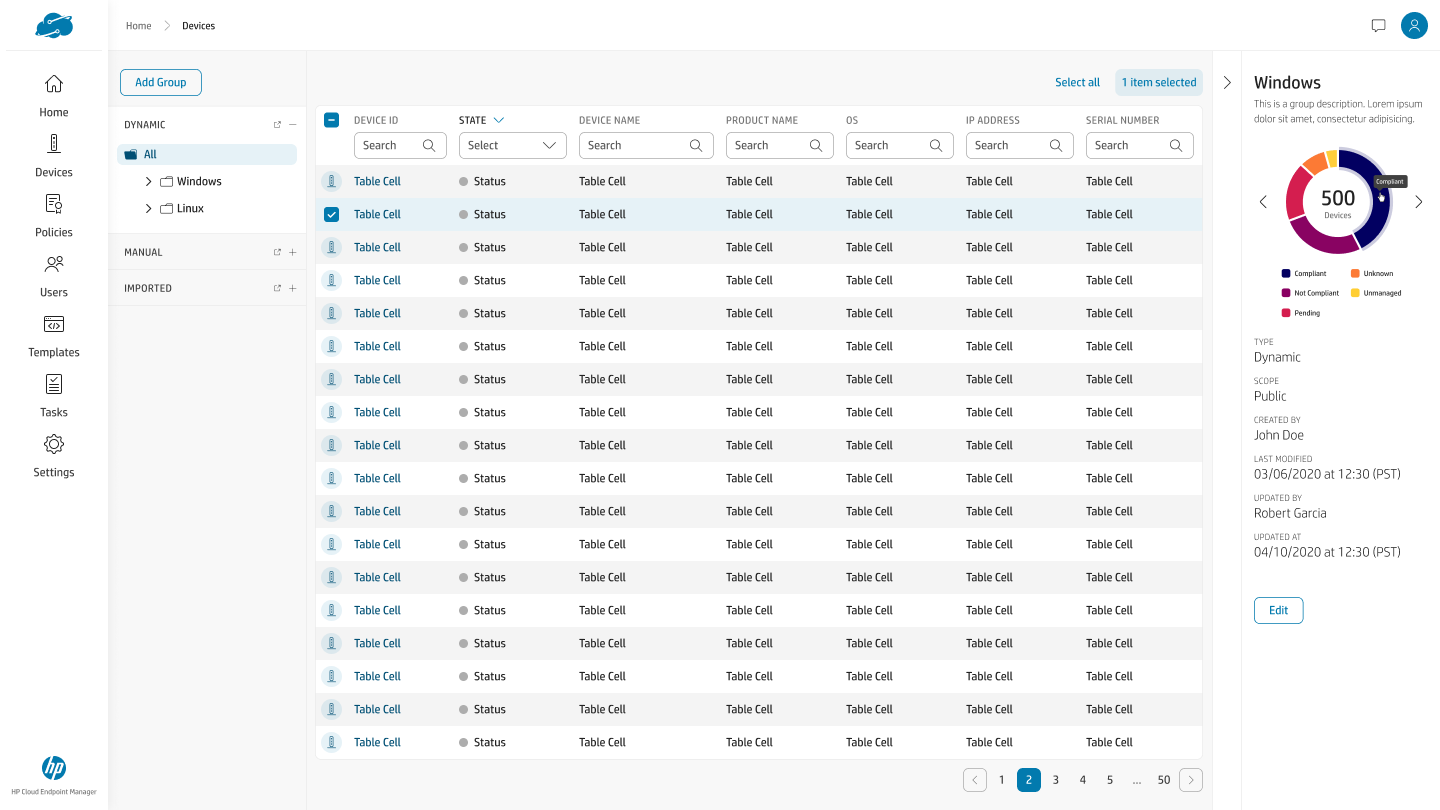
Direct group manipulation remains available to power users, but any move across a meaningful scope boundary requires explicit confirmation. Administrators keep the speed of drag-and-drop with clear blast-radius awareness.
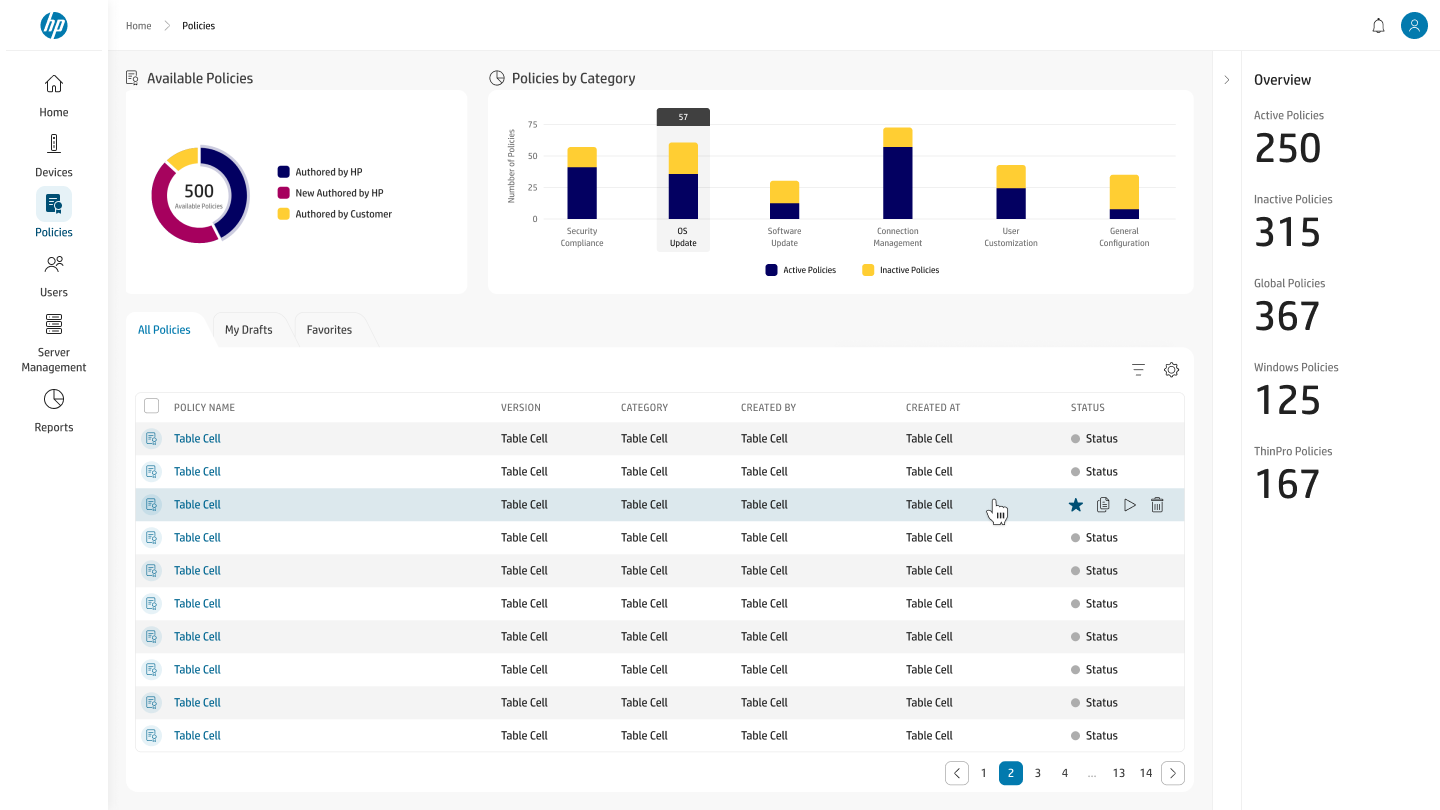
Overlapping policies will disagree at fleet scale. The resolution model supports bulk decisions first, then lets administrators inspect category-level detail only where judgment is required.
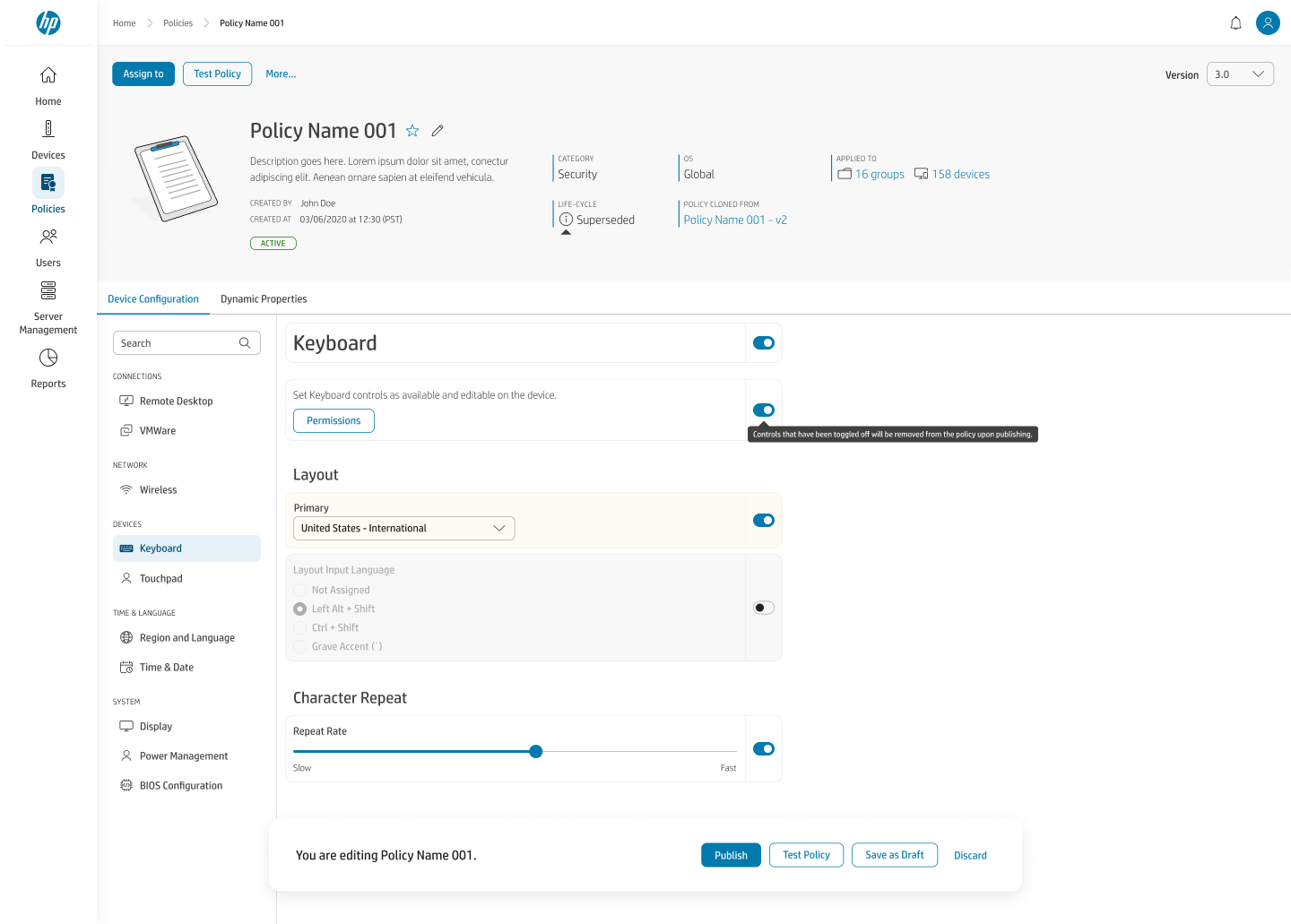
The policy header answers “what does this do to my fleet?” before the administrator edits it. Below, a shared configuration model represents both simple switches and complex multi-field settings without introducing unrelated workflows.
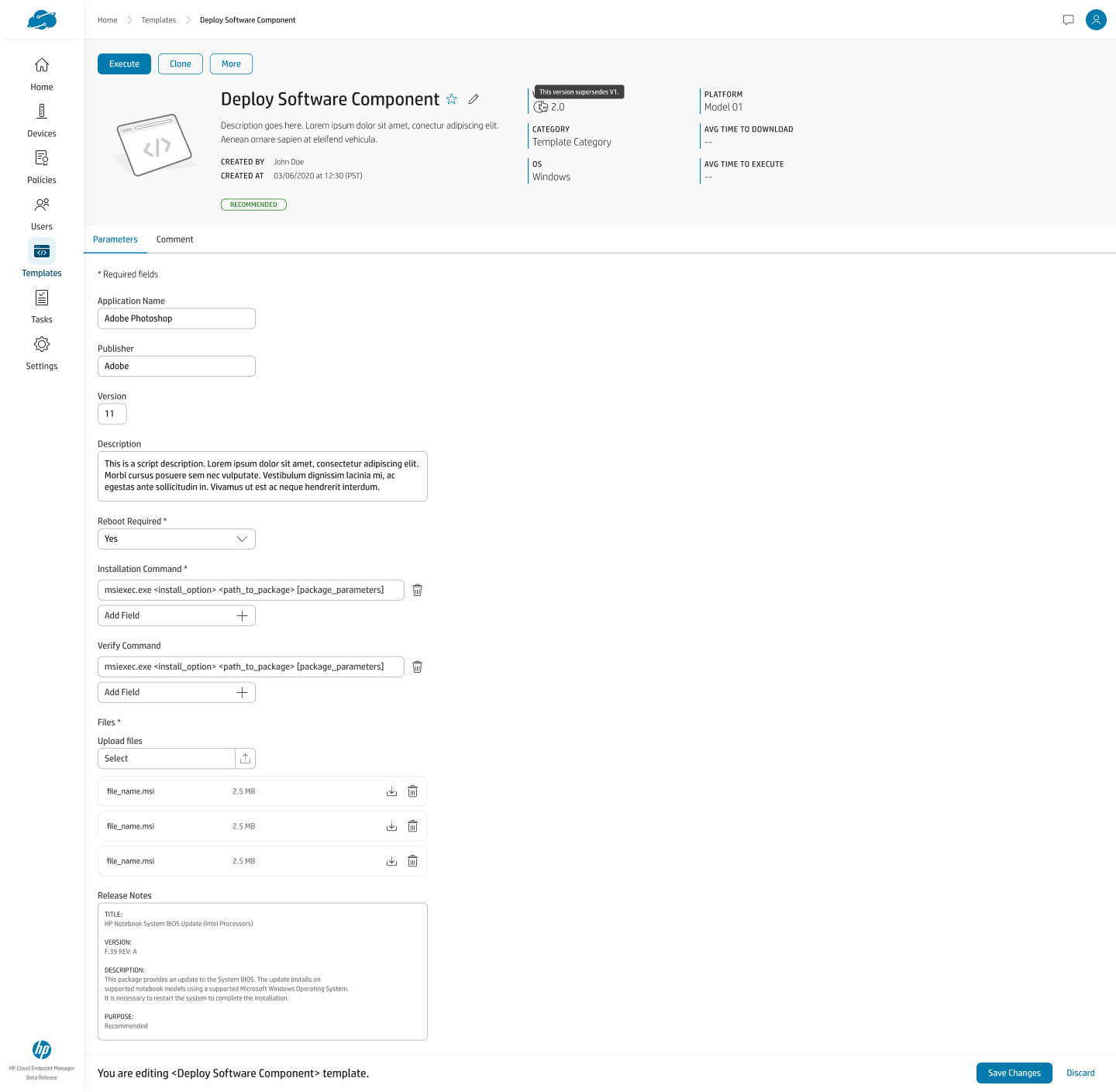
Scripts, registry changes, BIOS configurations, and software deployments remain shared objects rather than hidden copies. Their assigned policies stay visible so the ripple effect of an edit is understood before commitment.
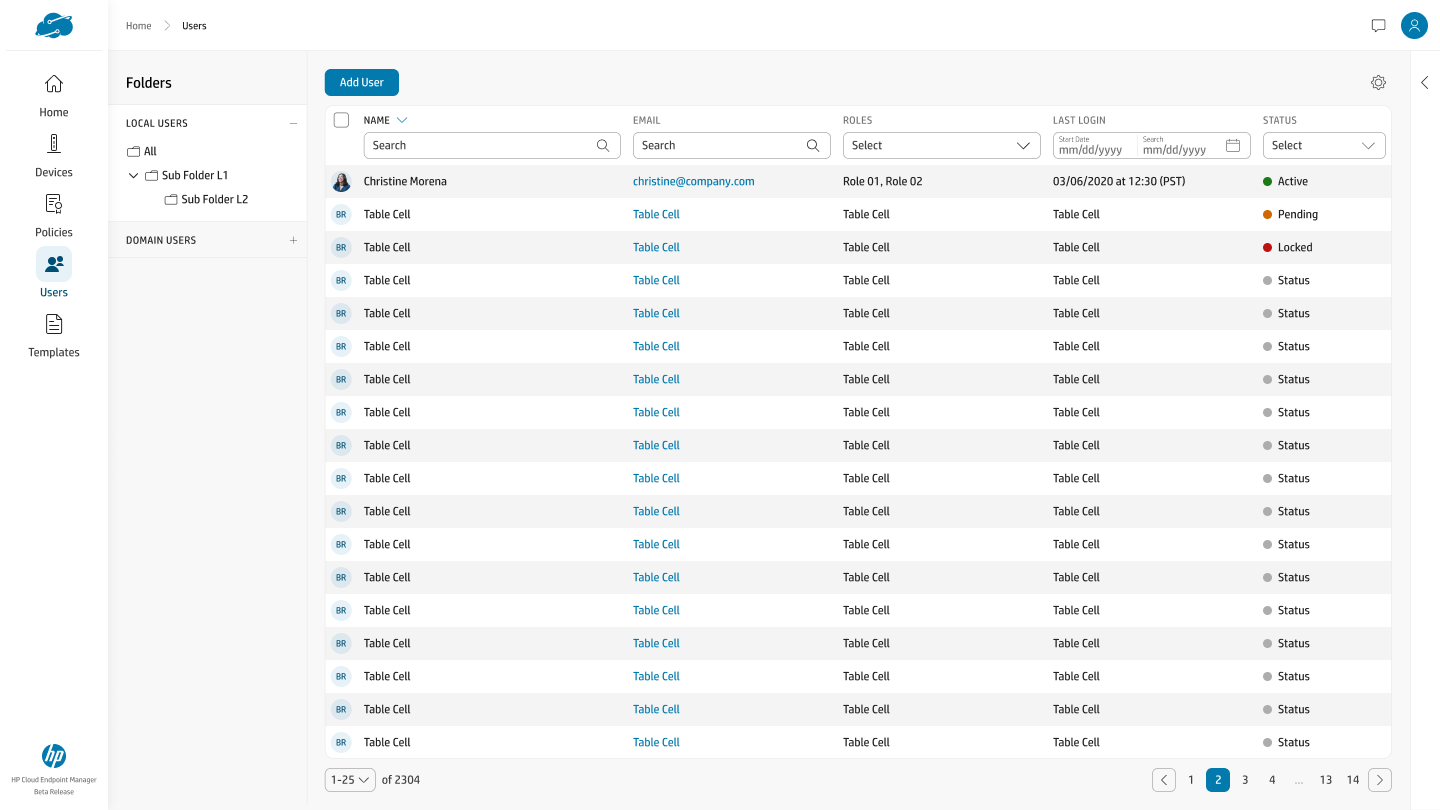
Local and domain users, roles, and account conditions are visible where decisions are made. Active, pending, and locked remain first-class states rather than one opaque flag an administrator has to interpret.
Outcome
- Established one operating model for device discovery, enrollment, policy authoring, configuration, compliance, remediation, templates, and user administration.
- Made the scope and consequence of high-impact actions visible before administrators commit fleet-wide changes.
- Consolidated more than 15 device-configuration categories into a shared interaction model that can absorb new capabilities without adding an unrelated workflow each time.
- Preserved reusable templates as shared objects while exposing the policies and devices affected by a change.
- Delivered the end-to-end design for HP's shipped cloud endpoint-management console.
The deeper outcome was not simply a more consistent interface. It was a product architecture capable of absorbing additional complexity without passing that complexity directly to the administrator.