HP Elite Earbuds
An ambient Windows companion that keeps battery and connection status glanceable, then opens deeper control only when the hardware needs attention.
OutcomeA progressive hardware-control experience that stays out of the way during normal use and gives users clear recovery when the earbuds, environment, or firmware interrupts them.
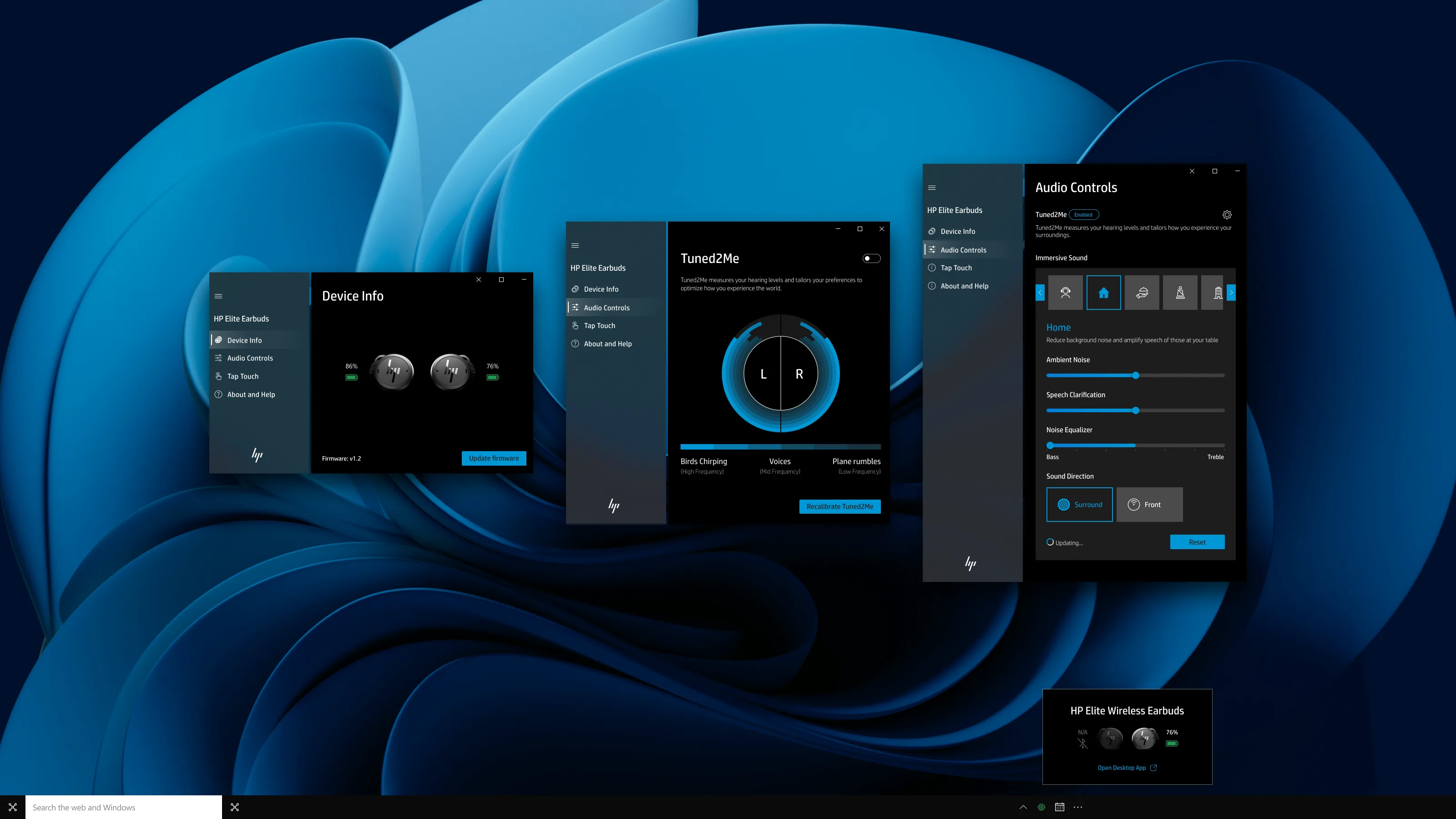
The Product Problem
The better the earbuds worked, the less users should have needed to interact with the software. Yet wireless hardware changes state constantly: either earbud can disconnect, batteries drain independently, devices move in and out of the case, firmware requires attention, and personalized calibration can be interrupted by noise or connection loss.
The product therefore had to answer three questions quickly: Are my earbuds connected? Do I need to do anything? If something went wrong, how do I recover? Everything else should remain out of the user's way until they intentionally ask for more control.
Product Strategy
Ambient first. The Windows tray became the front door for connection, battery, and attention states. Deep control when needed. Firmware, ANC, audio profiles, and Tuned2Me move into the desktop experience only when the task requires more space or focus.
Recovery is part of the product. Low battery, timeouts, environmental noise, connection loss, and interrupted calibration were modeled as primary states. The 66-frame system gave engineering an explicit behavioral contract instead of leaving hardware edge cases to local interpretation.
Key Product Decisions
Six views show how progressive engagement works across everyday awareness, intentional control, interruption, and recovery.

Frequent, low-intent checks should not require a full task switch. The tray makes connection and battery status immediate, then exposes deeper controls only after the device is reachable.
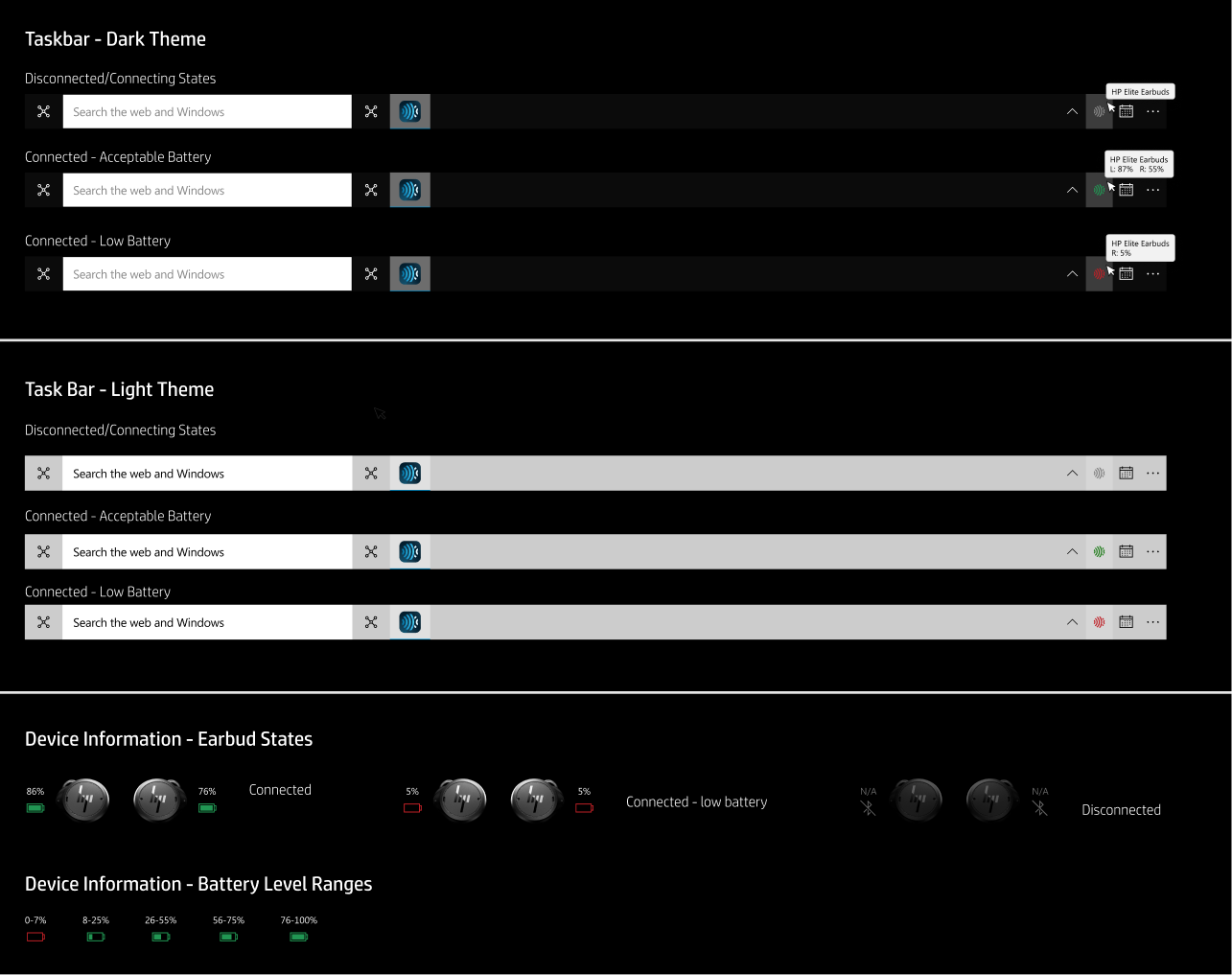
A shared model covers left and right earbuds, charging position, connection changes, and five battery bands so unusual or asymmetric conditions remain predictable for users and engineering.
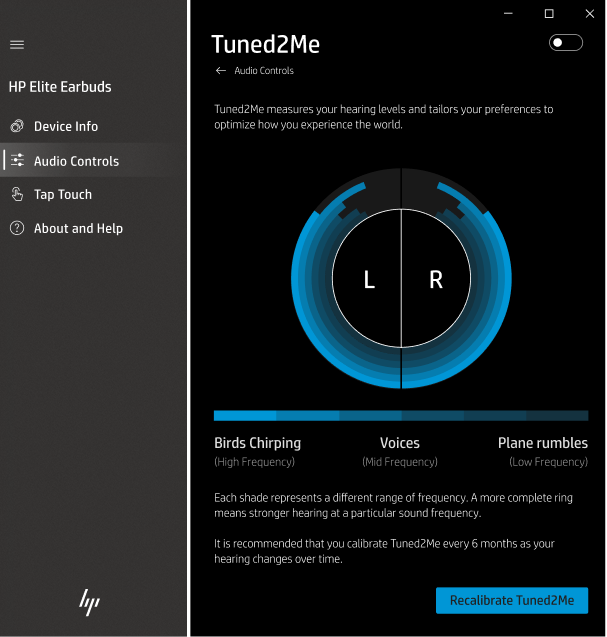
Tuned2Me treats noise, low battery, timeout, and connection loss as part of the primary flow. Each condition explains what happened, whether progress can continue, and what the user should do next.
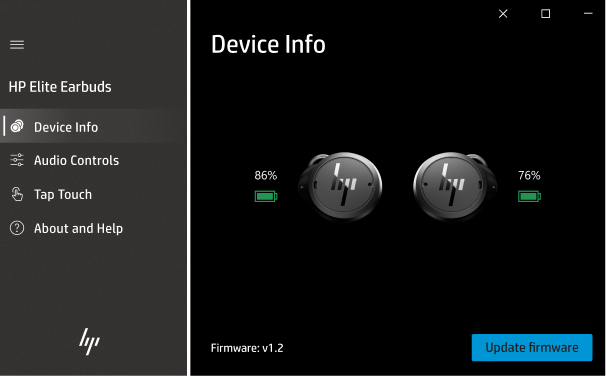
Prerequisites, progress, do-not-disconnect guidance, timeout handling, hard-error recovery, and completion provide distinct next steps instead of one unexplained failure state.
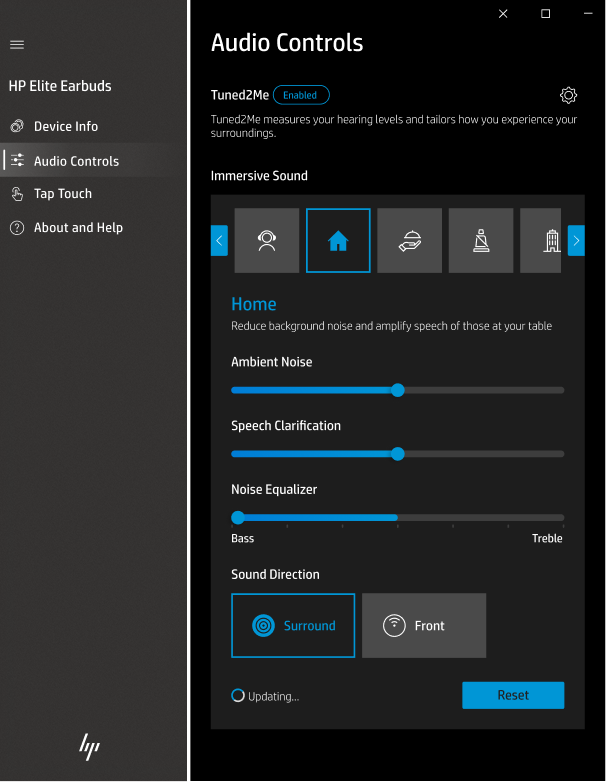
Tuned2Me, ANC, and Sound Situation share a predictable control language. Users learn fewer behaviors while the product can evolve without each feature becoming a separate interaction system.
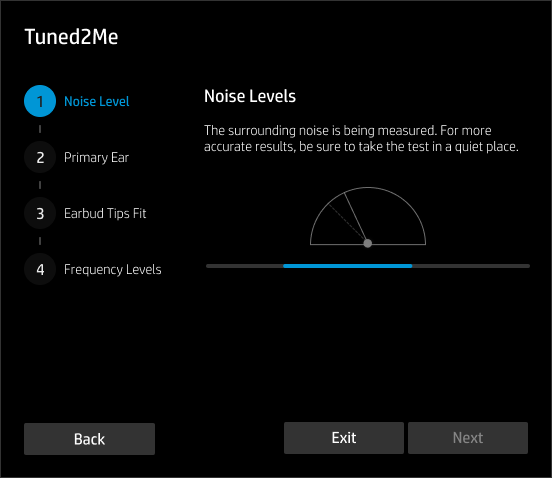
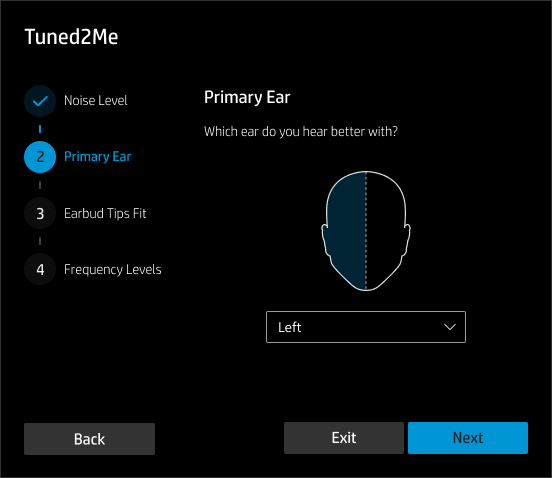
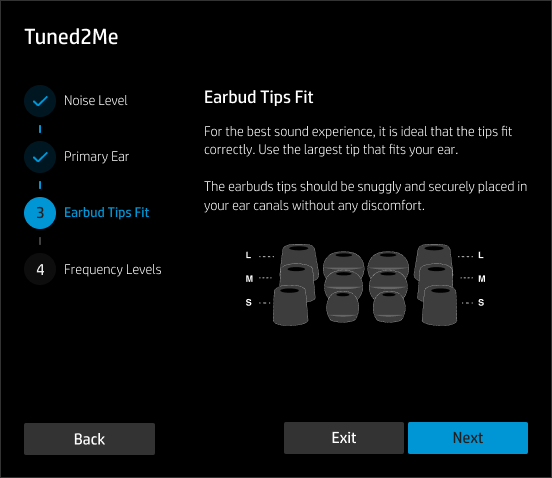
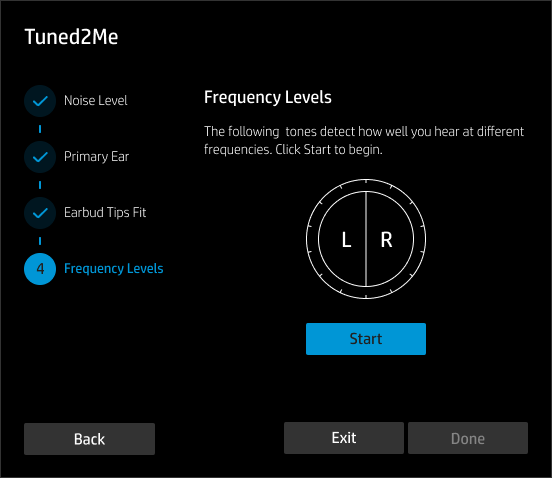
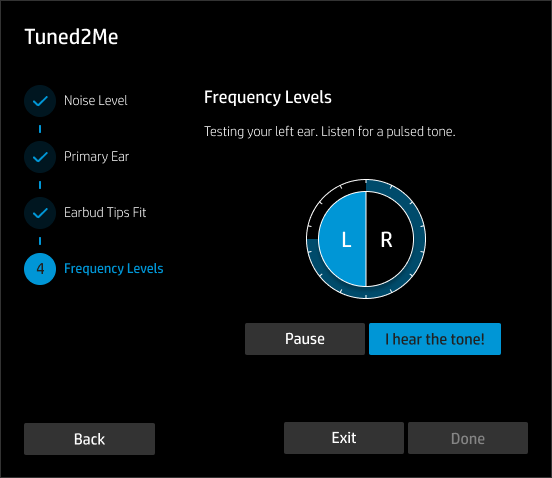
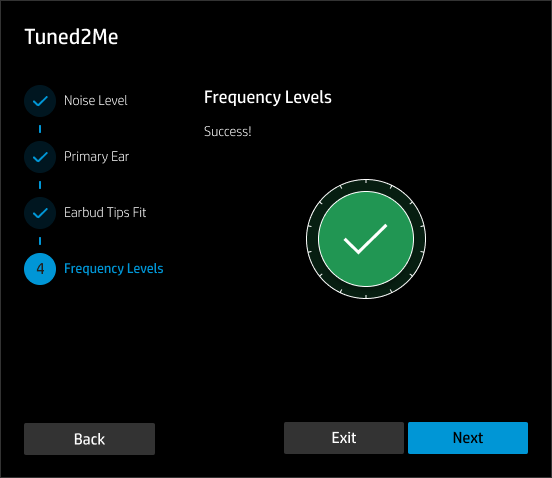
One feedback model carries eartip fit, primary-ear selection, noise checks, frequency measurement, and completion. The shared modal shell is implementation evidence of a predictable product experience.
Outcome
- Made common device information available without requiring users to open the full desktop application.
- Separated frequent, glanceable interactions from firmware, personalization, and audio tasks that require deeper attention.
- Created predictable communication across independently changing earbud, charging, battery, and connection conditions.
- Built interruption and recovery directly into personalized audio calibration and firmware management.
- Documented the experience as a buildable system spanning 66 shippable frames, eight modules, and shared interaction patterns used across dozens of contexts.
The internal system was complex because the hardware reality was complex. The user-facing outcome was simpler: spend less time managing the earbuds and more time using them.