Lucid Motors CX Portal
An exclusive customer experience for a high-commitment luxury EV purchase — reframing a website redesign as an ownership relationship, from first product story to vehicle start-up.
Outcome35% increase in pre-order conversion, 2× time spent in high-intent experiences, and a ~20-point NPS advantage over automotive benchmarks in the first three months after launch.
The Challenge
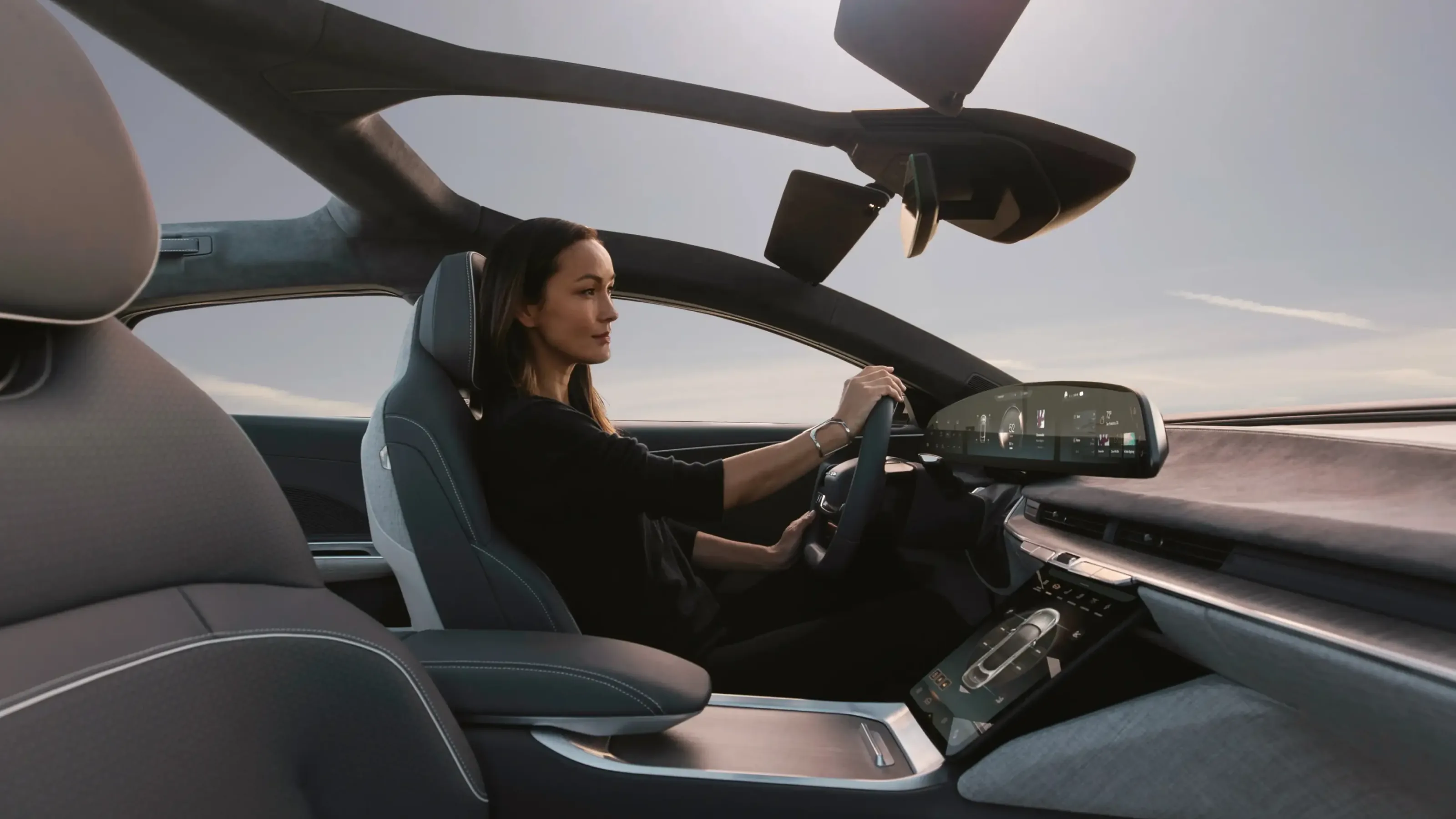
Lucid was entering the luxury electric-vehicle market with an ambitious promise: to create vehicles without compromise. Its flagship Lucid Air — named MotorTrend's Car of the Year — paired advanced engineering, refined design, and category-leading performance. The customer experience needed to express that same level of ambition.
But purchasing a luxury vehicle is a high-consideration decision, and purchasing one from a new automotive brand introduces additional questions — quality, service, charging, delivery, long-term support, and the realities of EV ownership. The digital experience had to do many things at once, and customers experience none of them as the separate organizational functions they'd been built as. To them, it is one relationship with Lucid. Our challenge was to design it accordingly.
- Communicate a technical product without overwhelming
- Translate engineering into customer benefit
- Build confidence in a new brand
- Support a long, non-linear decision
- Make configuration & pre-order feel premium
- Connect marketing, commerce, delivery & ownership
Reframing the Opportunity
The brief could have been treated as a website redesign. We reframed it as the design of an ownership relationship. The website would often be a customer's first meaningful interaction with Lucid, but it couldn't operate only as a campaign destination — it needed to become an evolving decision-and-ownership platform capable of creating aspiration, explaining the product, facilitating purchase, and supporting customers long after their reservation.
That ambition required balancing two forces throughout the experience. Emotion and evidence — customers needed to desire the vehicle, but also needed credible information to justify a significant financial commitment. Exclusivity and accessibility — the experience needed to feel elevated without becoming opaque, intimidating, or unnecessarily complicated.
Make every interaction feel as considered, intelligent, and uncompromising as the vehicle itself.
The Customer Journey
We examined the experience as a connected lifecycle rather than a linear conversion funnel. A customer could enter through a product announcement, an editorial story, a sustainability claim, a showroom visit, or a recommendation — then move repeatedly between inspiration, technical validation, pricing, configuration, and ownership before feeling ready to commit. We organized that lifecycle into six stages, which became a shared framework for aligning content, functionality, service touchpoints, and future product investment.
An immediate, differentiated introduction to Lucid's vision, design philosophy, and place within the EV category.
Performance, range, charging, technology, sustainability, and craftsmanship — explained in the language of customer value.
Credible product evidence, transparent information, expert validation, and a consistently premium experience that builds confidence in a new brand.
Exploration turns into personal investment as customers shape a vehicle around their needs — deliberate, understandable, visually rewarding.
Uncertainty reduced during reservation with clear pricing, expectations, next steps, and access to assistance — commitment that feels informed, not pressured.
The relationship extends through delivery, onboarding, ownership support, community, and advocacy — the waiting period turned into an opportunity, not a gap.
Key Customer Insights
Our work surfaced a set of principles about how luxury customers actually make a high-commitment decision — each one reshaped the experience.
Luxury customers still need clarity
A premium aesthetic couldn't come at the expense of usability. Customers needed direct answers about range, charging, availability, pricing, configuration, delivery, and service — beauty and clarity had to coexist.
Technical specifications require interpretation
Lucid's engineering was a real differentiator, but specs alone weren't enough. Efficiency had to mean more range from a smaller battery; packaging innovation, a more spacious interior; charging performance, less disruption on a long journey. We translated performance into tangible benefit.
Configuration is both functional and emotional
The configurator wasn't a transactional tool at the end of a funnel. It was one of the moments an abstract product became personally meaningful — so every choice needed to feel deliberate, understandable, and visually rewarding.
Confidence must continue after conversion
A reservation is the beginning of a high-expectation relationship, not the end of a sale. Customers needed visibility into what happens next and reassurance that Lucid would remain present through production, delivery, and ownership.
Brand consistency is operational
A seamless luxury experience can't be created by visual design alone. Content, interaction patterns, communications, customer service, retail, and vehicle onboarding all have to reinforce the same promise — consistency is a systems problem, not a style one.
Experience Principles
Elevated, never ornamental
Every visual and interaction detail should contribute to understanding, confidence, or emotional connection — nothing decorative for its own sake.
Technical, made human
Complex engineering should be communicated accurately while remaining approachable and relevant to the customer's life.
Progressive, not overwhelming
Information is revealed at the moment customers need it, letting them move from inspiration to deeper evaluation at their own pace.
Personal from the moment of interest
Selections, preferences, saved configurations, and context carry forward wherever possible — the experience remembers you.
Seamless across channels
Campaign, website, configurator, reservation, communication, retail, delivery, and ownership should feel continuous, not stitched together.
Designed for a relationship
Optimize not only for conversion, but for satisfaction, trust, retention, and advocacy — the metrics of a relationship, not a transaction.
The Solution — A Digital Flagship
We designed a restrained, editorially led experience that let the vehicle, its engineering, and its materials take center stage. Proportion, typography, motion, and whitespace created a sense of precision without decoration; content was structured to support both rapid exploration and deeper technical evaluation. The result could inspire prospective customers while still providing the substance a high-commitment decision demands.
We reorganized the product story around the questions customers were actually asking — Why Lucid? What makes it different? What does its technology improve for me? How practical is it to own? Which configuration fits my needs? What will it cost? What happens after I reserve? — connecting performance, design, sustainability, and technology through customer outcomes rather than disconnected marketing pillars.
A More Intentional Configuration
We treated the configurator as a central product experience rather than a utility at the end of the funnel — establishing a clear sequence for major and minor decisions, making price implications visible throughout, helping customers understand meaningful differences between options, and maintaining a strong visual connection to the vehicle as selections changed. Configurations were preserved so customers could leave and return, with clear transitions from exploration to reservation and reassurance at moments of uncertainty. This reduced cognitive load while preserving the sense of possibility a luxury purchase expects.
A More Confident Reservation
For a high-value product with an extended fulfillment timeline, conversion depends heavily on trust. We clarified the reservation by surfacing the purpose and amount of the payment, what was included and what remained subject to change, cancellation and refund expectations, anticipated next steps and communications, how to access help, and what would be available in the account after reserving. The experience was designed to make commitment feel informed rather than pressured — and we extended the journey well beyond the confirmation page.
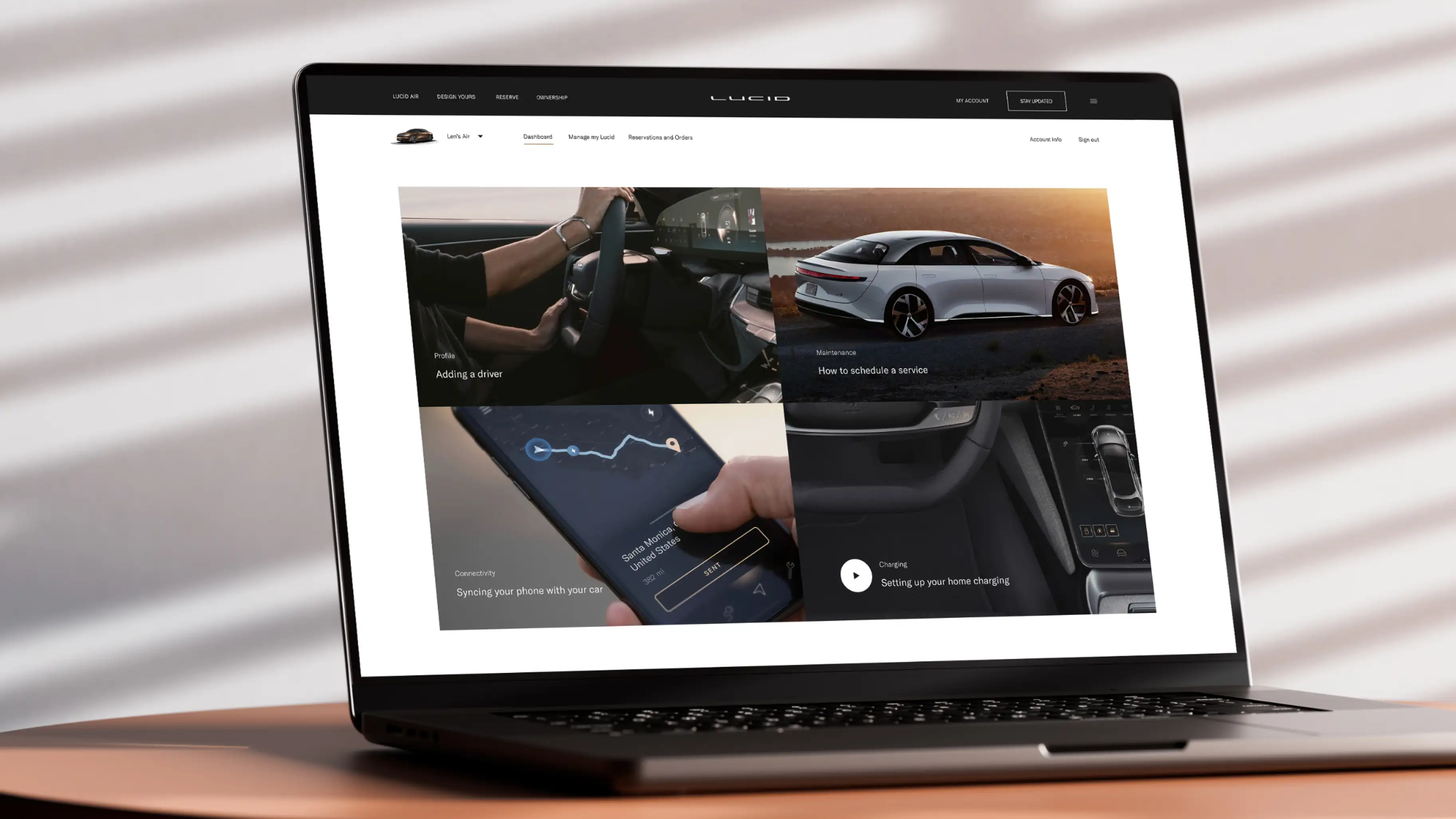
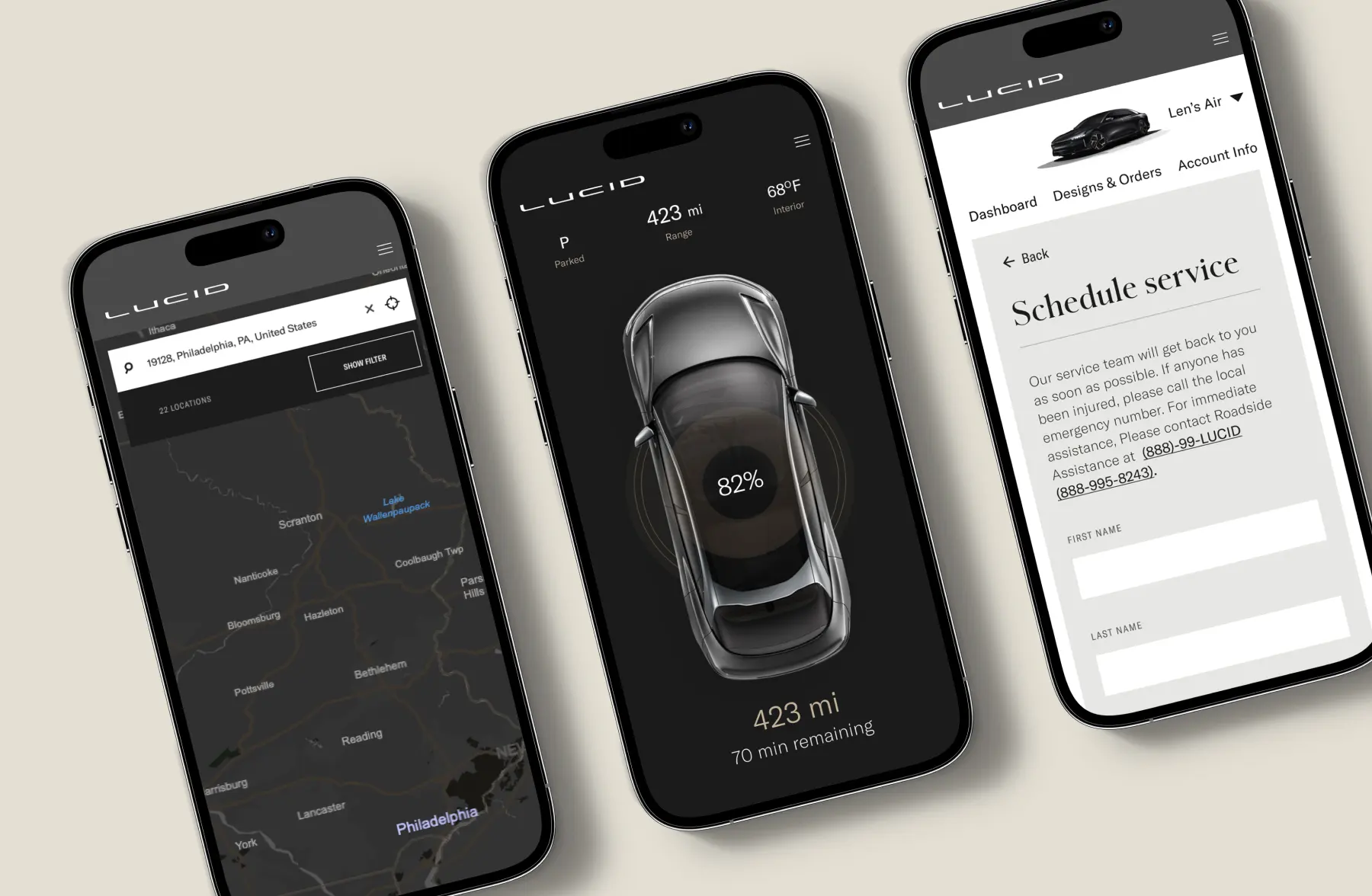
A Connected Pre-Ownership Experience
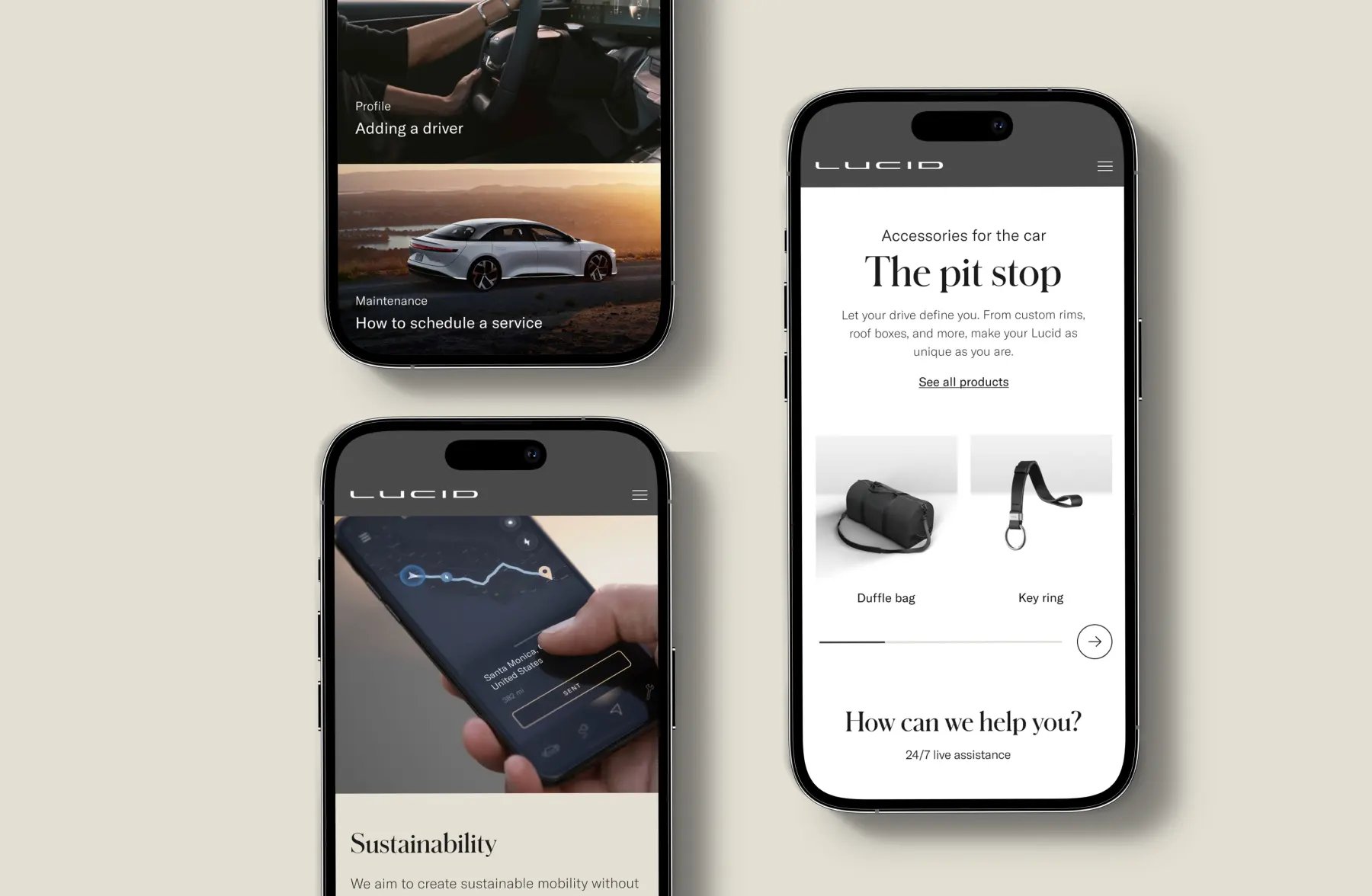
The post-reservation experience laid a foundation for order and production updates, configuration review, delivery preparation, charging and ownership education, account and payment information, personalized communications, access to support, and invitations to events, previews, and community. A reservation stopped being a service gap and became an opportunity to deepen confidence and anticipation before the vehicle ever arrived.
Content as Part of the Product
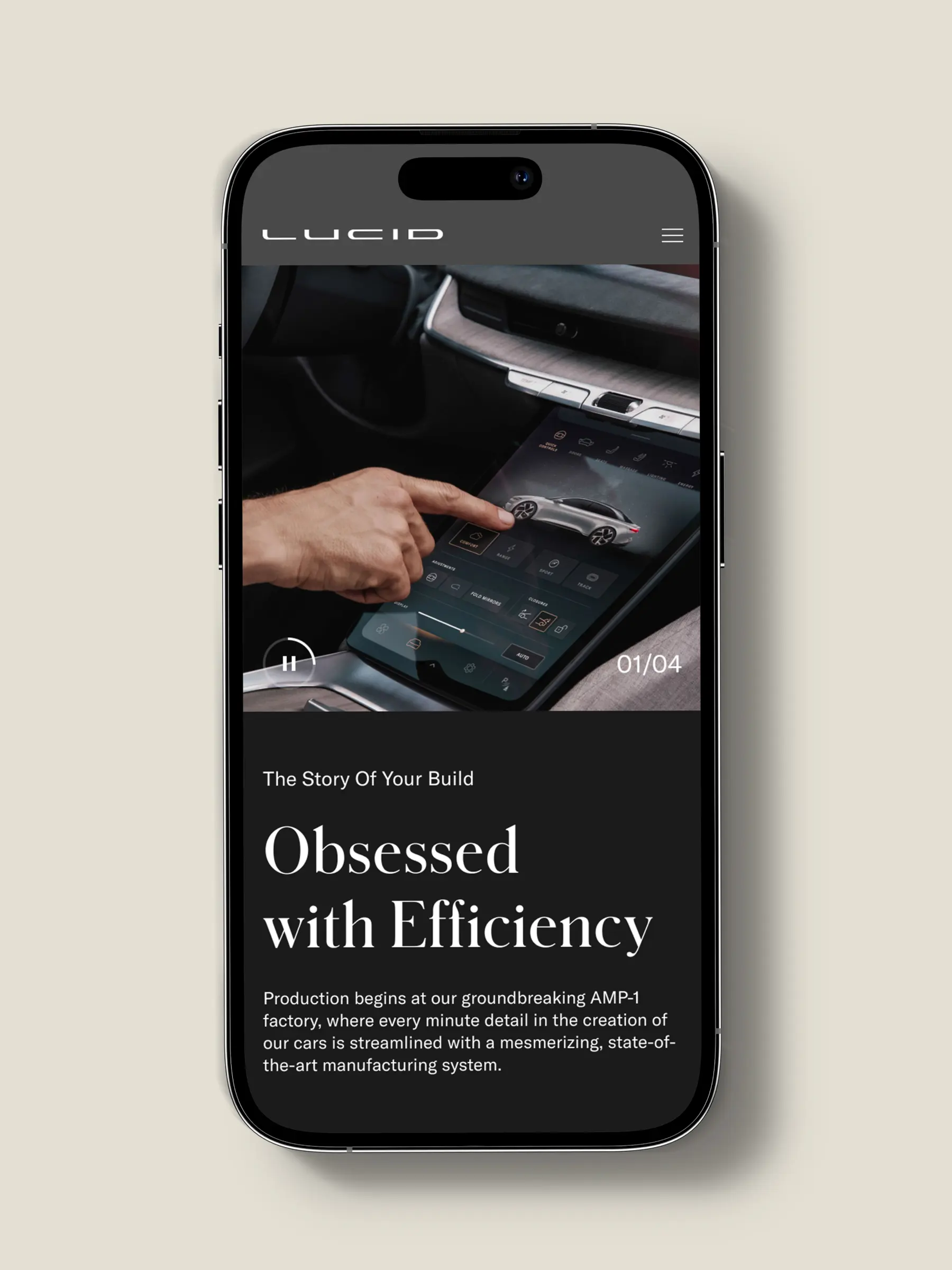
Content strategy played a central role throughout — a framework spanning aspirational brand storytelling, product and technology education, evidence-grounded sustainability narratives, configuration guidance, purchase and delivery expectations, EV-ownership education, and customer and community stories. It gave Lucid a consistent way to communicate across the lifecycle while reducing duplication between marketing, commerce, and support — and it was designed to turn an already-engaged following of enthusiasts and reservation holders into an active part of the brand's growth.
Designing the Service Behind the Interface
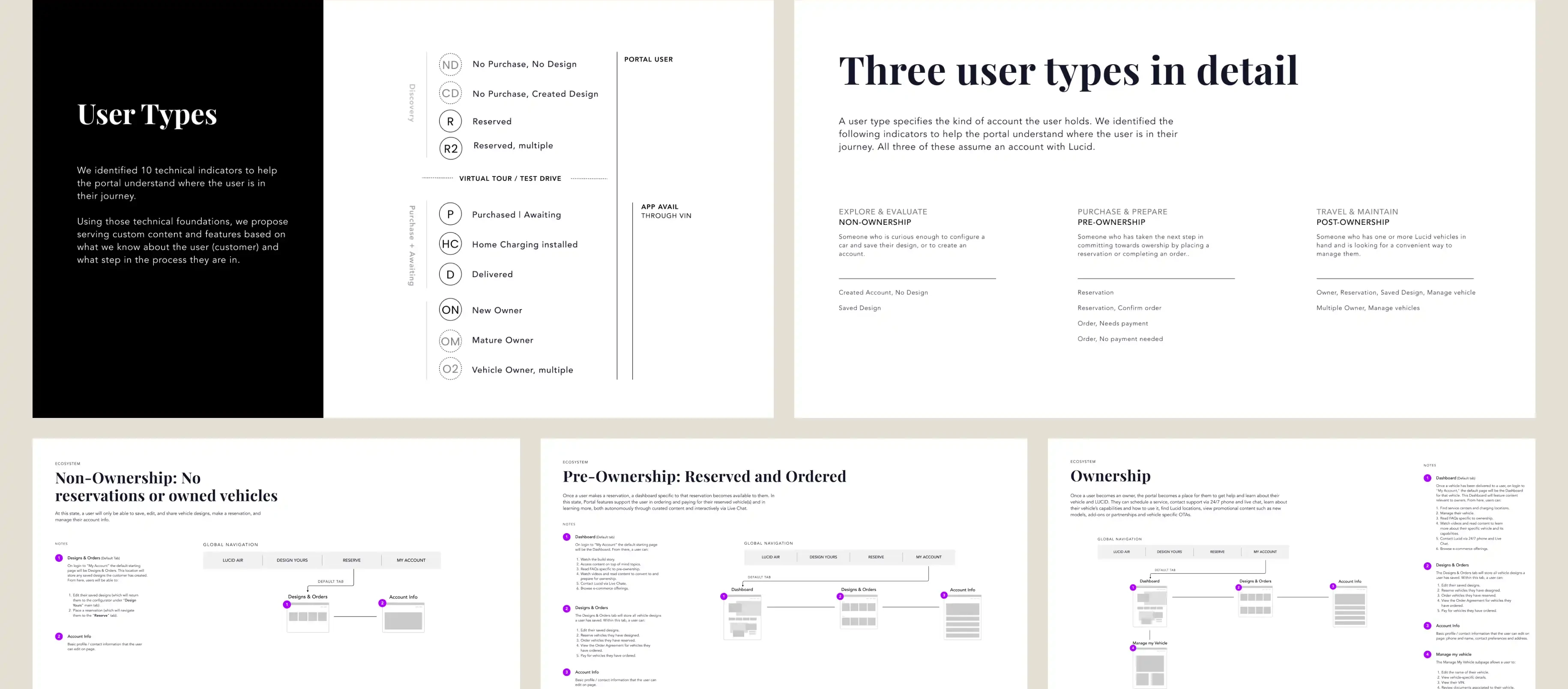
Many of the most important customer moments depended on systems and teams outside the website. We modeled the user by where they actually were in the journey — a taxonomy of technical indicators (from no purchase, no design through reserved, delivered, and multiple-vehicle owner) resolving into three portal states: non-ownership, pre-ownership, and ownership. Then we mapped the dependencies connecting marketing, vehicle and inventory data, configuration, customer accounts, reservation and payment systems, CRM, retail, delivery operations, support, and ownership services — distinguishing interface-level improvements from the larger operational changes a genuinely connected experience required.
Building for Scale
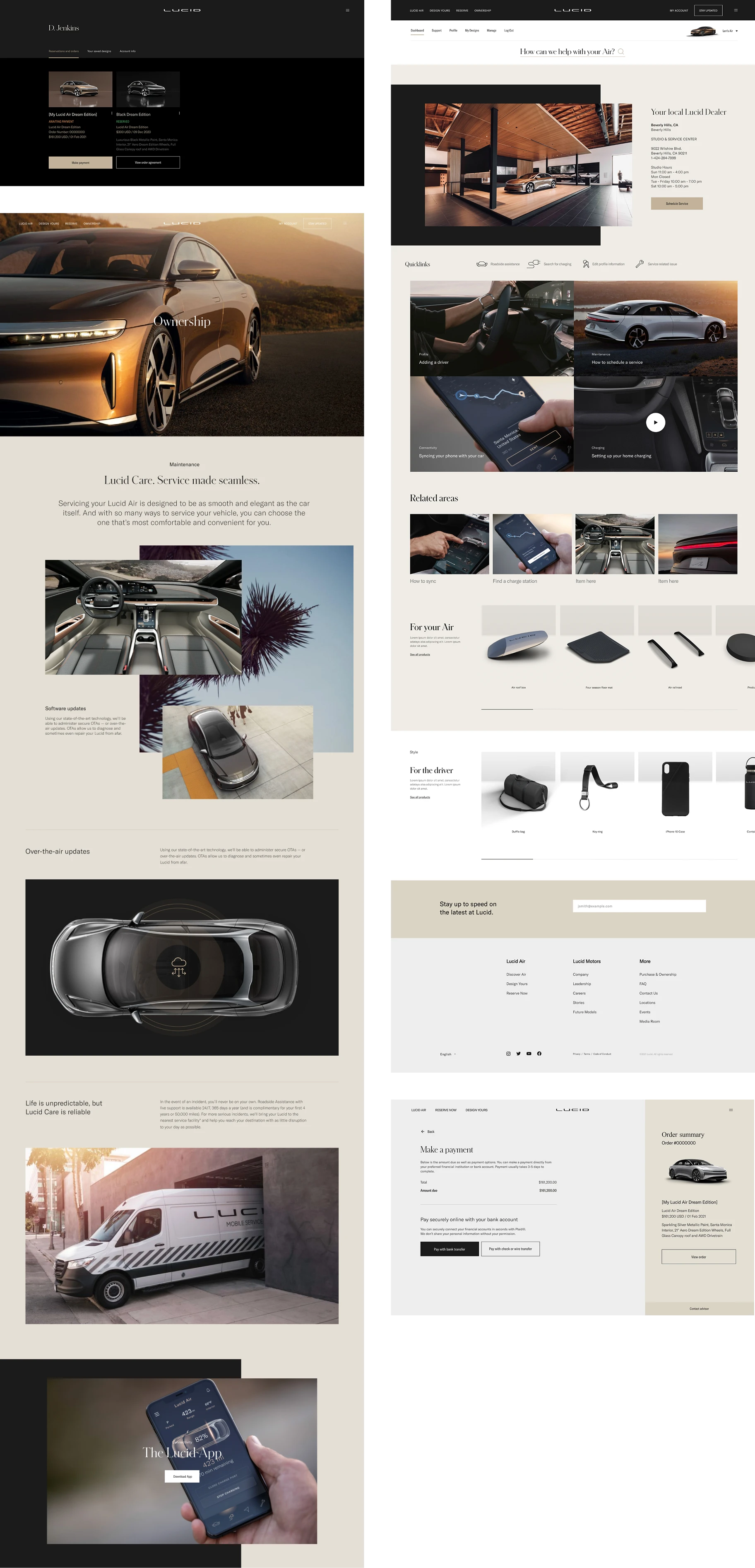
The experience had to support more than a single vehicle launch. We created a foundation that could evolve across additional models and variants, new markets and regional requirements, changing availability and delivery conditions, expanded ownership services, new content formats, retail-and-digital integration, and a growing community of owners. Reusable content structures, interaction patterns, and design-system components kept the experience consistent while letting future teams introduce new work efficiently — and the resulting roadmap balanced near-term improvements against longer-term platform capability by customer value, business impact, and complexity.
Outcomes
- Stronger product storytelling and a clearer reservation journey moved more customers from consideration to commitment.
- Customers didn't just browse longer — they spent more time evaluating the product's most important differentiators.
- Post-purchase, customers frequently described the transition from digital exploration to physical ownership as seamless and premium.
- The launch reinforced Lucid's position as a design- and technology-led EV brand — a distinctive alternative to both established manufacturers and newer EV competitors.
Reflection
The strongest outcome wasn't a single page or feature — it was a shared customer-experience model that connected brand, product, commerce, content, and service. Luxury is often expressed through visual restraint, but a premium customer experience is ultimately created through coherence: ensuring that every interaction — from the first product story to configuration, reservation, delivery, and the vehicle's own start-up sequence — felt like part of the same carefully designed relationship. The engagement showed how product design can align emotional storytelling, complex technology, commerce, and service operations around a single customer promise: an experience designed without compromise.